“You sure that steak’s done?” my partner asked, peering over my shoulder as the kitchen filled with the intoxicating scent of sizzling beef. Honestly, I wasn’t sure either at first—the idea of reverse searing a ribeye had me a bit skeptical. Why not just pan-sear like always? But after a few tries (okay, more like three times in one week), this method won me over with a juicy center and a caramelized crust that’s nothing short of magic.
It all started on a hectic Thursday evening when I had a stubborn craving for a steak that felt like a restaurant masterpiece but without the fuss or guesswork. The reverse sear technique was a gamble—slowly cooking the steak in the oven first, then finishing with a hot sear. That sweet smell of Maillard reaction developing as the crust formed was a game changer. The steak came out tender, juicy, and with a crust so golden and flavorful it practically begged for a second bite.
What stuck with me was how forgiving this approach felt. No more worrying about overcooking or under-searing. When you nail that perfect reverse sear ribeye steak with juicy, caramelized crust, it’s like your kitchen turns into a cozy steakhouse—minus the crowded tables and noisy chatter. This recipe became my secret weapon for impressing friends at impromptu dinners, especially paired with sides like a crispy sheet pan potato dish or a creamy garlic butter sauce.
So, if you’ve ever hesitated to try reverse searing, or just want a foolproof way to get that steakhouse-quality ribeye, you might find this method as satisfying as I did. There’s something quietly satisfying about biting into a steak cooked just right, and this recipe delivers that every time.
Why You’ll Love This Recipe
After testing countless cooking methods and tweaking seasoning, this reverse sear ribeye steak recipe stands out because:
- Quick & Easy: Total cook time is about 45 minutes, with most of it hands-off. Great for busy weeknights or when you want a hearty meal without hovering over the stove.
- Simple Ingredients: You only need a few pantry staples—high-quality ribeye, salt, pepper, and a bit of butter or oil. No complicated marinades or special sauces required.
- Perfect for Special Occasions: Whether it’s a dinner date, weekend treat, or a chill Sunday supper, this steak never fails to impress.
- Crowd-Pleaser: I’ve served this at family dinners and casual get-togethers, and it always gets requests for seconds. Kids and adults alike are hooked on that juicy texture and caramelized crust.
- Unbelievably Delicious: The reverse sear technique creates a steak with an even cook and a crust that’s bursting with savory, roasted beef flavor.
This recipe isn’t just another steak method—it’s the one I trust for consistent results. The slow oven cook prevents the dreaded gray bands of overcooked meat, while the hot sear locks in flavor and creates that crave-worthy crust. Plus, I love how it pairs effortlessly with other favorites like the loaded baked potato bar or even a fresh salad.
It feels like a little culinary win every time you slice into that perfectly cooked ribeye. No rushing, no stress—just steak done right.
What Ingredients You Will Need
This recipe uses straightforward, wholesome ingredients to deliver bold flavor and a satisfying texture without any fuss. Most are pantry staples, and substitutions are easy if you need them.
- Ribeye steak: 1 thick-cut ribeye, ideally 1.5 to 2 inches thick (about 12-16 oz / 340-450g). Look for well-marbled meat for juiciness.
- Salt: Coarse kosher salt or sea salt works best for seasoning and drawing out moisture.
- Freshly ground black pepper: Adds that essential peppery kick to the crust.
- High smoke point oil: Such as grapeseed, canola, or avocado oil (about 1-2 tablespoons). Avoid olive oil as it burns too quickly during searing.
- Unsalted butter: 2 tablespoons, for finishing the steak with a rich, glossy coating.
- Fresh garlic cloves: 2 smashed cloves (optional, but adds lovely aroma during searing).
- Fresh thyme or rosemary sprigs: A few sprigs, optional but recommended for aromatic flavor.
If you want to swap the ribeye for a leaner cut, try a sirloin steak or strip steak, although the cooking times may vary slightly. For a dairy-free option, skip the butter or use a vegan butter alternative.
Pro tip: I usually get my ribeyes from a trusted local butcher or the meat counter at the grocery store—quality makes a big difference here. Also, letting the steak come to room temperature before cooking helps with even doneness.
Equipment Needed
- Oven-safe wire rack and baking sheet: The wire rack lets air circulate around the steak for even cooking during the oven phase. If you don’t have one, use a rimmed baking sheet and flip the steak halfway.
- Instant-read meat thermometer: Absolutely essential for nailing the perfect internal temperature without cutting into the steak.
- Heavy skillet or cast iron pan: For the searing step. Cast iron is ideal because it holds heat well and creates that amazing crust.
- Tongs: For easy flipping and handling of the steak during searing.
- Small spoon: To baste the steak with butter and aromatics while searing.
If you’re on a budget, a simple oven-safe wire rack can be found for under $10 at most stores or online. No fancy gadgets required, and most of us already have some form of skillet or frying pan that will do the job.
Personally, I keep a dedicated cast iron skillet just for steaks and hearty searing jobs. It’s seasoned over time and just gets better with use, making every crust better than the last.
Preparation Method
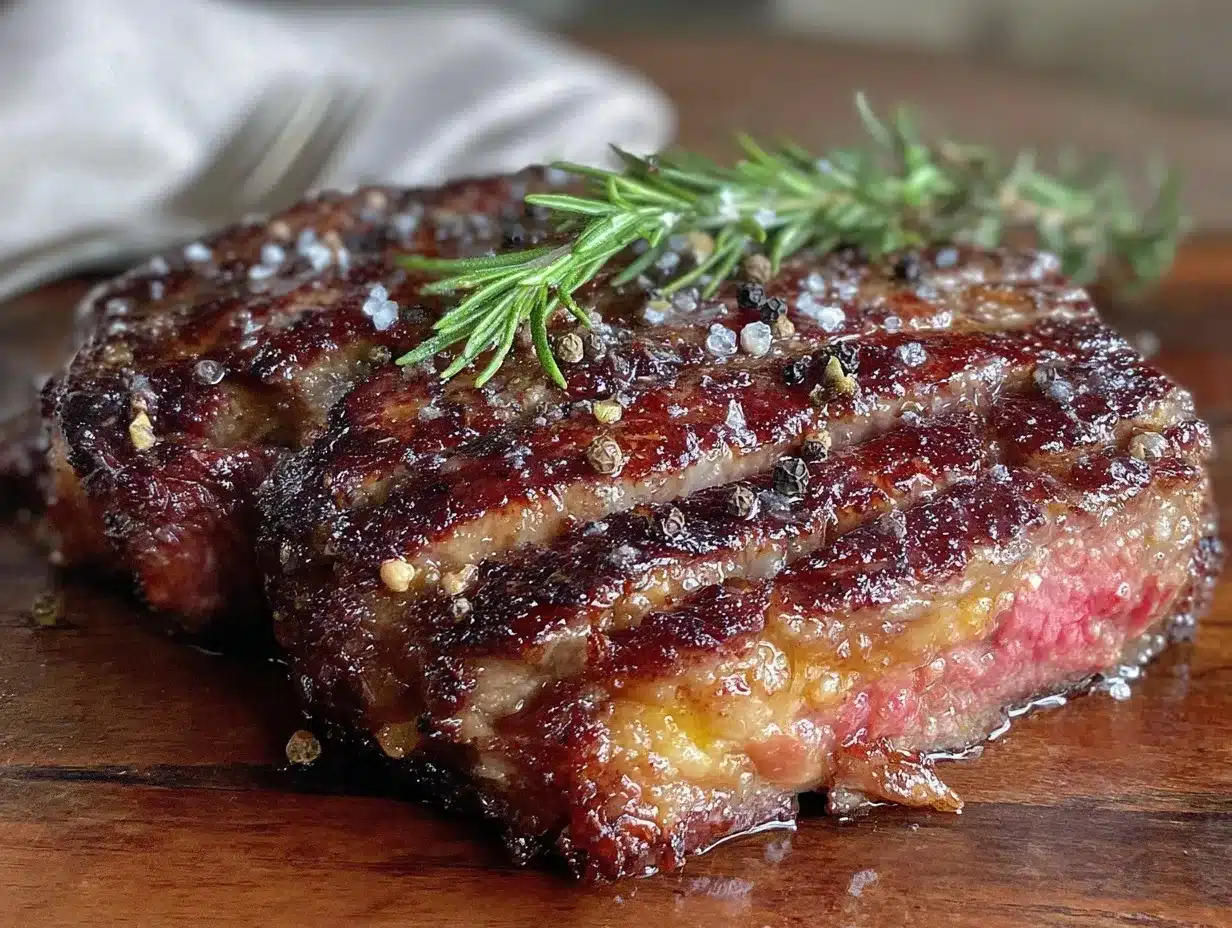
- Bring the ribeye to room temperature: Remove the steak from the fridge 30-45 minutes before cooking. This step helps the steak cook evenly and prevents that cold center.
- Preheat your oven to 275°F (135°C): The low and slow start is what sets the reverse sear apart. It gently cooks the steak all the way through.
- Season the steak generously: Pat the ribeye dry with paper towels, then season both sides liberally with coarse salt and freshly ground black pepper. This helps build flavor and that crave-worthy crust.
- Place the steak on an oven-safe wire rack set inside a baking sheet: This setup allows air to circulate for even cooking. Insert the instant-read thermometer into the thickest part of the steak before placing it in the oven.
- Cook the steak in the oven: Roast until the internal temperature reaches about 115°F (46°C) for rare, 120°F (49°C) for medium-rare, or 125°F (52°C) for medium. This usually takes 20-30 minutes, depending on thickness. Keep a close eye to avoid overshooting.
- Heat your skillet on high: While the steak is nearing its target temp, add oil to a heavy skillet and get it smoking hot. This is key for that perfect crust.
- Sear the steak: Place the ribeye in the hot pan and sear for 1-2 minutes on each side, until a deep golden-brown crust forms. During the last minute, add butter, smashed garlic, and fresh herbs, tilting the pan and spooning the melted butter over the steak to baste and infuse flavor.
- Rest the steak: Transfer the steak to a cutting board and let it rest for 5-10 minutes. This lets the juices redistribute, so every bite is juicy and tender.
- Slice and serve: Cut against the grain for maximum tenderness. Serve with your favorite sides or sauces.
Note: If you want to be absolutely sure of doneness, the USDA recommends an internal temp of 145°F (63°C) followed by a 3-minute rest for medium. But for that classic steakhouse medium-rare, the temps above are what I go by.
When searing, listen for that satisfying sizzle and watch for the crust to turn a rich mahogany color. If it browns too quickly, lower the heat slightly to avoid burning.
This method takes some patience compared to a quick pan-sear, but the payoff is undeniable: a steak cooked evenly edge-to-edge with a crust that sings.
Cooking Tips & Techniques
- Pat the steak dry: Moisture is the enemy of a good crust, so make sure you blot your ribeye dry before seasoning.
- Don’t skip the rest period: Resting is crucial to juicy steaks—cutting too soon lets the flavorful juices run out.
- Use a thermometer, not guesswork: I learned this the hard way. The instant-read thermometer saves you from overcooked or underdone steak.
- High heat for searing: The skillet must be very hot before adding steak. If it’s lukewarm, you’ll get more of a stew than a crust.
- Baste with butter and herbs: Adding butter and aromatics while searing brings extra richness and dimension to the crust.
- Don’t overcrowd your pan: Sear one steak at a time for even browning. Overcrowding traps steam and prevents caramelization.
- Multitasking tip: While the steak’s in the oven, prep your sides or make a quick sauce. This keeps the kitchen flow smooth and dinner ready faster.
One time, I tried to rush the sear and ended up with a burnt crust and a steak that was dry inside. Lesson learned: patience pays off, and the reverse sear method gives you that patience window without sacrificing texture.
Variations & Adaptations
- Garlic Butter Ribeye: After searing, top the steak with a pat of garlic herb butter to melt over for a rich finish.
- Spicy Cajun Twist: Add a Cajun seasoning blend to the salt and pepper rub for a bold, smoky flavor kick.
- Herb-Crusted Ribeye: Mix finely chopped fresh rosemary, thyme, and parsley into the seasoning for an aromatic crust.
If you prefer grilling, you can reverse sear the steak by cooking it slowly on indirect heat until nearly done, then moving it to direct flame for a quick sear. Just watch closely to avoid flare-ups.
For a keto-friendly option, pair the ribeye with low-carb sides like sautéed greens or a creamy mushroom sauce. If you need to avoid dairy, skip the butter or use olive oil for basting.
Personally, I once tried a coffee-rub variation, which added a subtle earthiness to the crust—but for classic ribeye lovers, the simple salt, pepper, and butter combo never disappoints.
Serving & Storage Suggestions
Serve the ribeye steak warm, sliced thinly against the grain on a warmed plate. It pairs beautifully with a side of roasted vegetables, creamy mashed potatoes, or even a simple green salad to balance the richness.
For a hearty meal, I like to add a loaded baked potato bar with classic toppings—it’s a crowd-friendly combo that brings everyone to the table. You can check out my loaded baked potato bar recipe for ideas.
Leftovers keep surprisingly well in the fridge for up to 3 days. Store the steak wrapped tightly in foil or an airtight container. Reheat gently in a low oven (around 250°F / 120°C) or on a skillet over medium-low heat to avoid drying out.
Flavors tend to deepen after resting overnight, making cold steak sandwiches or quick pan-fried steak bites a delicious next-day option.
Nutritional Information & Benefits
This ribeye steak recipe provides a hearty dose of high-quality protein and essential nutrients like iron, zinc, and B vitamins. The marbling in ribeye offers healthy fats that contribute to satiety and flavor.
Approximate nutrition per 12 oz (340g) ribeye steak: 850 calories, 65g protein, 65g fat, 0g carbs. Keep in mind these numbers vary with cut thickness and cooking method.
For those watching carbs or gluten intake, this recipe is naturally gluten-free and low-carb, making it suitable for paleo or keto diets with minimal adjustments.
While rich, ribeye steak can be part of a balanced diet when paired with plenty of vegetables and moderate portion sizes. I personally appreciate it as an occasional indulgence that fuels my active lifestyle.
Conclusion
If you want a steak that’s juicy, tender, and boasts a perfectly caramelized crust, this reverse sear ribeye recipe is your new go-to. It takes a bit more time than a quick pan-sear but pays you back with consistent, restaurant-worthy results every single time.
Feel free to tweak the seasoning or try the variations to suit your taste buds—this method is forgiving and flexible. I keep coming back to it because it turns a simple ribeye into something worth savoring, whether it’s a quiet weeknight or a special occasion.
Give it a try, and let me know how your steak turns out. If you love rich, buttery flavors, you might also enjoy my perfect pan-seared steak with herb butter recipe for a slightly different take with a quick skillet finish.
Happy cooking, and may your steak nights be ever delicious!
FAQs
- What thickness of ribeye works best for reverse searing? Ideally, use steaks that are at least 1.5 to 2 inches thick. Thinner cuts cook too quickly and may not develop the perfect crust.
- Can I reverse sear other types of steak? Yes! This method works well for strip steaks, sirloin, and even filet mignon, though cooking times will vary.
- How do I know when to stop cooking in the oven? Use an instant-read thermometer and remove the steak when it reaches about 115°F (46°C) for rare or 120°F (49°C) for medium-rare before searing.
- Can I use olive oil for searing? It’s better to use a high smoke point oil like grapeseed or avocado oil. Olive oil burns quickly and can give a bitter taste.
- What if I don’t have a wire rack? You can place the steak directly on a baking sheet and flip it halfway through cooking, though airflow won’t be as even.
Pin This Recipe!
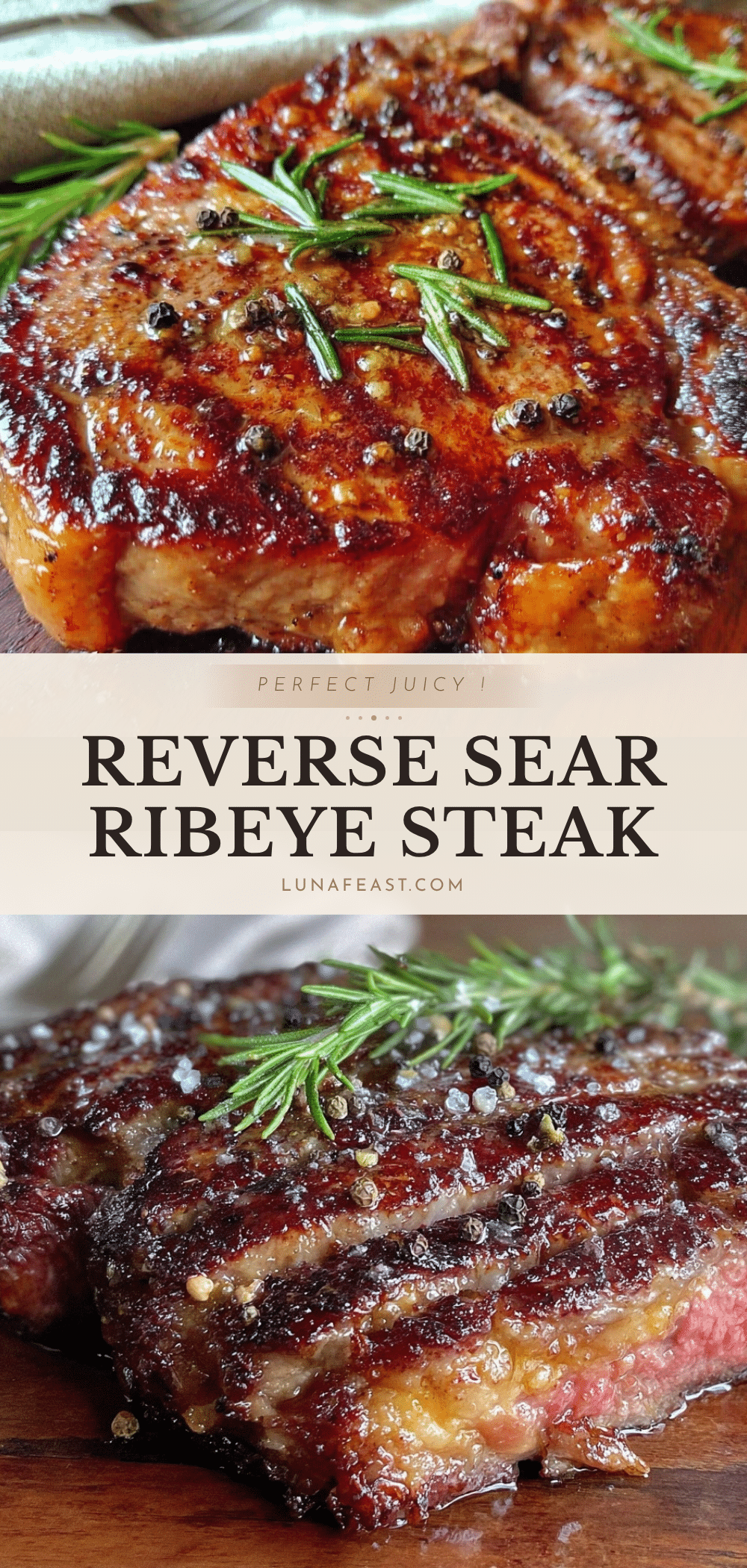
Perfect Reverse Sear Ribeye Steak Recipe for Juicy, Caramelized Crust
This reverse sear ribeye steak recipe delivers a juicy center and a caramelized crust with a foolproof method that combines slow oven cooking and a hot skillet sear for steakhouse-quality results.
- Prep Time: 10 minutes
- Cook Time: 30 minutes
- Total Time: 40 minutes
- Yield: 1 steak (serves 1-2) 1x
- Category: Main Course
- Cuisine: American
Ingredients
- 1 thick-cut ribeye steak, 1.5 to 2 inches thick (12–16 oz / 340-450g)
- Coarse kosher salt or sea salt, to taste
- Freshly ground black pepper, to taste
- 1–2 tablespoons high smoke point oil (grapeseed, canola, or avocado oil)
- 2 tablespoons unsalted butter
- 2 smashed fresh garlic cloves (optional)
- A few sprigs fresh thyme or rosemary (optional)
Instructions
- Remove the ribeye from the fridge 30-45 minutes before cooking to bring it to room temperature.
- Preheat your oven to 275°F (135°C).
- Pat the ribeye dry with paper towels, then season both sides liberally with coarse salt and freshly ground black pepper.
- Place the steak on an oven-safe wire rack set inside a baking sheet. Insert an instant-read thermometer into the thickest part of the steak.
- Cook the steak in the oven until the internal temperature reaches about 115°F (46°C) for rare, 120°F (49°C) for medium-rare, or 125°F (52°C) for medium, usually 20-30 minutes.
- While the steak is nearing its target temperature, heat a heavy skillet or cast iron pan on high and add the oil, heating until smoking hot.
- Sear the steak for 1-2 minutes on each side until a deep golden-brown crust forms. During the last minute, add butter, smashed garlic, and fresh herbs, basting the steak with melted butter.
- Transfer the steak to a cutting board and let it rest for 5-10 minutes to allow juices to redistribute.
- Slice the steak against the grain and serve with your favorite sides or sauces.
Notes
Let the steak come to room temperature before cooking for even doneness. Use a thermometer to avoid overcooking. Pat steak dry before seasoning to ensure a good crust. Rest steak after cooking to keep it juicy. Use high smoke point oil for searing to avoid burning.
Nutrition
- Serving Size: One 12-16 oz ribeye
- Calories: 850
- Fat: 65
- Protein: 65
Keywords: reverse sear, ribeye steak, steak recipe, caramelized crust, juicy steak, cast iron steak, oven steak, steakhouse steak