Late October, and the squash at the farmers market have stopped pretending to be decorative. There they sit—acorn, butternut, a few knobby heirlooms—and then the delicata, pale yellow with those green stripes, small enough to hold in one hand. I picked one up without really thinking, paid the farmer, and walked home with it tucked under my arm like a secret. I didn’t know yet that this would become my favorite way to eat squash. I just knew I was tired of roasting things that took forty-five minutes and left me hungry halfway through.
The thing about delicata is you don’t peel it. That alone makes it worth buying. The skin is thin and tender, and when you roast it right, it gets these crispy edges that taste almost like something fried. I’ve made it plain, with just salt and oil, and it was fine. But this version—the one with Parmesan and a little garlic, roasted until the cheese turns brown and lacy—this one made me stop mid-bite and just stand there in the kitchen, chewing.
I’ve made it four times since then. Once for myself on a Tuesday, once for a friend who texted me later asking for the recipe, and twice more because I couldn’t stop thinking about it. It’s not complicated. It’s not fancy. But it is, honestly, the kind of side dish that steals the show without trying. And if you’ve ever had a squash that came out soggy or bland, let me tell you—this one is different.
Why You’ll Love This Recipe
This isn’t your standard roasted squash situation. I’ve tested this more times than I care to admit, tweaking temperatures and cook times, trying different grates of Parmesan, and even experimenting with parchment versus foil. What I landed on is a method that delivers consistent, crispy, cheesy results every single time. Here’s why this recipe works:
- Quick & Easy: From start to table in about 30 minutes. No peeling, no complicated prep, no waiting around.
- Simple Ingredients: You need delicata squash, Parmesan cheese, olive oil, garlic powder, salt, and pepper. That’s it. No trips to a specialty store.
- Perfect for Fall: This works for weeknight dinners, holiday sides, or meal prep. It’s versatile enough for a Tuesday or a Thanksgiving table.
- Crowd-Pleaser: I’ve served this to people who “don’t like squash” and watched them go back for seconds. The crispy cheese wins everyone over.
- Unbelievably Delicious: The edges get golden and shattery, the inside stays creamy, and the Parmesan forms a crust that’s honestly addictive. It’s comfort food that feels a little fancy but takes almost no effort.
What makes this recipe different from the dozens of other roasted squash recipes out there? It’s the technique. Most recipes tell you to toss everything together and hope for the best. I found that arranging the squash in a single layer with the cheese sprinkled on top—not mixed in—gives you that crispy, almost fried texture without actually frying anything. It’s a small change, but it makes all the difference.
I also tested this with different cheeses. Pecorino works, but it’s saltier. A blend of Parmesan and panko breadcrumbs adds crunch but changes the flavor. The straight Parmesan version? That’s the one I keep coming back to. It’s the one that made me close my eyes after the first bite, standing over the baking sheet with a spatula in my hand.
What Ingredients You Will Need
This recipe uses a short list of ingredients, and each one plays a specific role. Here’s what you need and why it matters:
- Delicata squash (2 medium, about 1.5 pounds total): Look for squash that feels heavy for its size and has no soft spots. The skin should be firm and bright. You don’t need to peel it—just wash it well, cut it in half lengthwise, scoop out the seeds, and slice into half-moons about ½-inch thick. If you can’t find delicata, you can substitute acorn squash, but you’ll need to peel it first and the cooking time will be slightly longer.
- Parmesan cheese (½ cup, finely grated): This is not the time for pre-shredded cheese in a bag. Those have anti-caking agents that prevent melting and browning. Buy a block of real Parmesan—Parmigiano-Reggiano if you can swing it—and grate it yourself on the fine side of a box grater. The texture matters here because you want the cheese to melt into thin, crispy sheets, not clump up in sad little balls. I recommend the brand BelGioioso for a reliable, affordable option at most grocery stores.
- Extra-virgin olive oil (2 tablespoons): You need enough oil to coat the squash without drowning it. A good quality olive oil adds flavor, but you can use avocado oil if that’s what you have. Just don’t use a flavored oil—it will compete with the Parmesan.
- Garlic powder (½ teaspoon): Garlic powder distributes more evenly than fresh garlic and won’t burn at high heat. If you really want to use fresh, mince it very fine and toss it with the oil first, but watch the squash closely toward the end—fresh garlic can turn bitter if it burns.
- Salt (½ teaspoon): Use fine sea salt or kosher salt. If you’re using table salt, reduce to ¼ teaspoon because it’s more concentrated. The Parmesan is already salty, so don’t overdo it.
- Black pepper (¼ teaspoon, freshly ground): Freshly ground pepper adds a subtle warmth that complements the squash. Pre-ground pepper works, but it won’t have the same pop.
- Optional garnish: Fresh parsley or thyme (1 tablespoon, chopped): This is purely for looks and a little freshness. I skip it half the time and don’t miss it.
Substitution notes: For a dairy-free version, use nutritional yeast instead of Parmesan. The texture won’t be as crispy, but the flavor will still be good. For a lower-fat option, you can reduce the oil to 1 tablespoon, but the squash won’t brown as evenly. If you’re gluten-free, this recipe already is—just double-check your Parmesan label to make sure it doesn’t contain anti-caking agents with gluten.
Equipment Needed
You don’t need much for this recipe, which is part of why I love it. Here’s what you’ll want to have on hand:
- Baking sheet (half-sheet pan, 18×13 inches): A rimmed baking sheet is ideal because it catches any oil that pools. If you don’t have one, any large oven-safe pan will work, but avoid glass baking dishes—they don’t conduct heat as well and the squash won’t crisp up properly.
- Parchment paper or aluminum foil: Lining the pan makes cleanup almost nonexistent. Parchment is better than foil because the squash releases more easily, but foil works in a pinch if you grease it lightly. I’ve forgotten to line the pan before and spent ten minutes scrubbing—learn from my mistake.
- Chef’s knife and cutting board: A sharp knife is important here because delicata squash is dense. A dull knife can slip, and that’s how you end up with a bandage on your finger instead of dinner on the table.
- Box grater or Microplane: For grating the Parmesan. A Microplane gives you a finer, fluffier grate that melts more evenly. A box grater’s fine side works too. I’ve used both and honestly prefer the Microplane for this—it takes an extra minute but the texture is noticeably better.
- Large bowl (for tossing): Any mixing bowl big enough to hold the sliced squash works. You don’t need anything fancy.
- Spatula or tongs: For flipping the squash halfway through. Tongs give you more control, but a spatula works fine.
Budget tip: If you don’t have a Microplane, a vegetable peeler can create thin Parmesan shavings that will melt into crispy edges. It’s not the same as grated, but it works in a pinch. And if you don’t have a baking sheet? A cast-iron skillet works beautifully—just watch the cooking time because cast iron holds heat differently.
Preparation Method
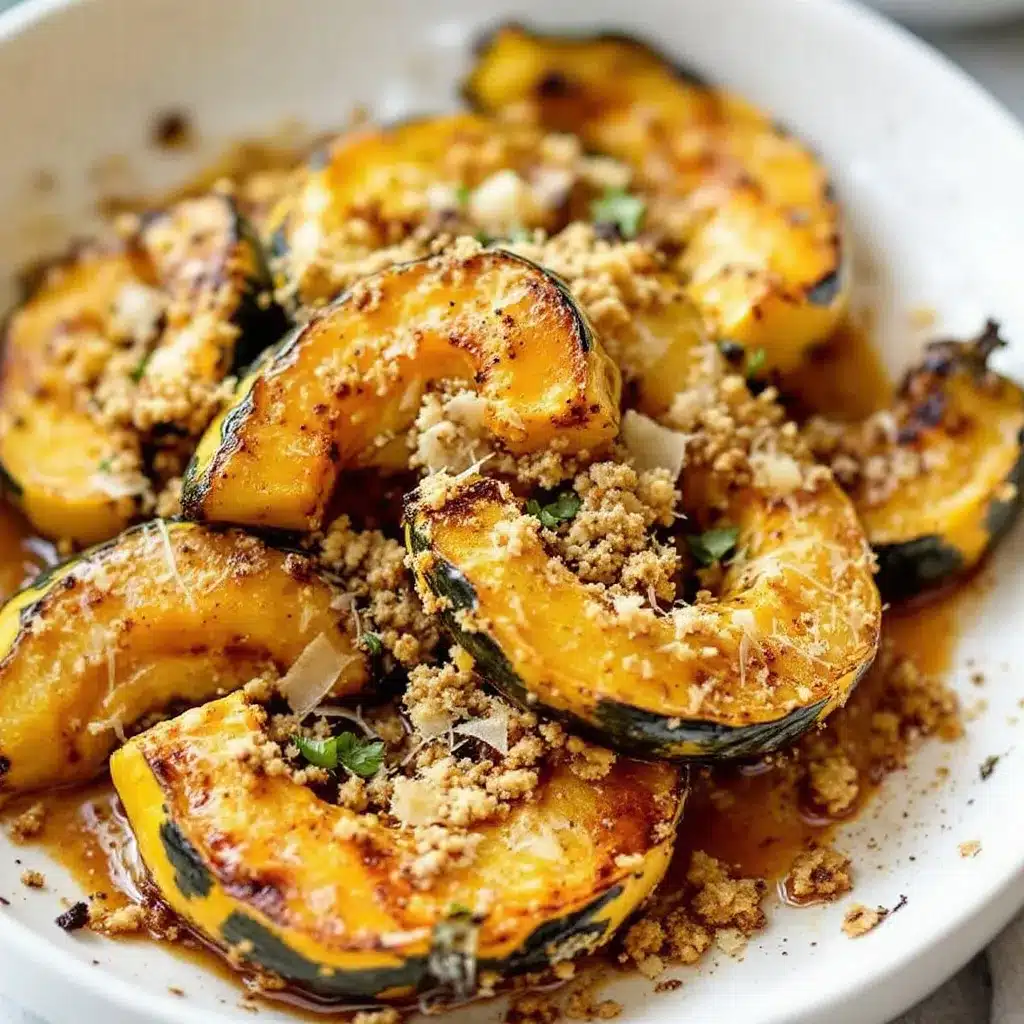
Let’s get into the actual cooking. This is straightforward, but a few details make the difference between good squash and great squash.
- Preheat your oven to 425°F (220°C). This temperature is key—hot enough to crisp the cheese and caramelize the squash, but not so hot that the Parmesan burns before the squash is tender. Position the rack in the middle of the oven. While the oven heats, line your baking sheet with parchment paper or foil.
- Prepare the squash. Wash the delicata squash thoroughly under running water. The skin is edible, but you want to remove any dirt or residue. Pat it dry with a clean towel. Cut off both ends of the squash—about ¼ inch from each tip—and discard. Slice the squash in half lengthwise. Use a spoon to scoop out the seeds and the stringy pulp. (Don’t throw the seeds away! You can rinse them, toss with a little oil and salt, and roast them alongside the squash for a crunchy snack.) Place each half cut-side down on your cutting board and slice crosswise into half-moons about ½-inch thick. Try to keep the slices uniform so they cook evenly. Thicker slices will be creamier inside but take longer to crisp; thinner slices get crispier faster but can dry out. I’ve found ½ inch is the sweet spot.
- Season the squash. In a large bowl, combine the sliced squash, olive oil, garlic powder, salt, and pepper. Use your hands or a spatula to toss everything together until every piece is evenly coated. This takes about 30 seconds. Don’t rush it—unevenly coated squash leads to uneven browning. I like to use my hands here because I can feel when everything is coated, but a spatula works fine if you’re not into getting your fingers oily.
- Arrange on the baking sheet. Spread the seasoned squash slices in a single layer on the prepared baking sheet. Do not overlap them. If they’re crowded, they’ll steam instead of roast, and you’ll lose that crispy edge. If your squash doesn’t fit in one layer, use two baking sheets or roast in batches. I learned this the hard way when I tried to cram everything onto one pan and ended up with limp, soggy squash.
- Add the Parmesan. Sprinkle the grated Parmesan evenly over the squash slices. Don’t toss it—just let it fall where it lands. Some pieces will get more cheese, some less, and that’s exactly what you want. The cheese will melt and spread as it bakes, creating those lacy, crispy edges. If you toss the cheese with the squash beforehand, it just disappears into the oil and you lose the texture.
- Roast for 15 minutes. Place the baking sheet in the preheated oven and set a timer. At the 15-minute mark, remove the pan and use a spatula or tongs to flip each piece of squash. The cheese side should be golden and starting to crisp. Be gentle—the squash will be tender and can break apart if you’re too rough. If some cheese sticks to the parchment, just scrape it up and flip it over; it will crisp up on the other side.
- Roast for another 10-15 minutes. Return the pan to the oven and roast until the squash is tender when pierced with a fork and the cheese is deep golden brown and crispy. Start checking at the 10-minute mark. Ovens vary, and you want to catch it before the cheese burns. The edges should look dark brown, almost caramelized, but not black. If you see black spots, pull it out immediately.
- Cool slightly and serve. Let the squash rest on the baking sheet for 2-3 minutes. This allows the cheese to set and become even crispier. Transfer to a serving platter or plate, scraping up any crispy cheese bits that fell off. Garnish with fresh herbs if you’re using them. Serve warm, not piping hot—the flavor is actually better when it’s had a minute to settle.
Sensory cues: When the squash is done, the kitchen should smell nutty and toasty, like browned butter and roasted vegetables. The cheese should look like thin, golden lace draped over the squash. When you bite into a piece, you should hear a slight crunch before the creamy interior gives way. If the squash is still firm when you pierce it with a fork, give it another 3-5 minutes.
Cooking Tips & Techniques
I’ve made this recipe more times than I can count, and I’ve made just about every mistake possible. Here’s what I’ve learned:
- Don’t skip the flipping step. I know it’s tempting to just let it roast without touching it, but flipping ensures both sides get crispy. The first time I made this, I forgot to flip and ended up with one side that was beautifully browned and one side that was pale and soft. Still edible, but not the same.
- Watch the cheese. Parmesan goes from perfectly browned to burnt very quickly. If your oven runs hot, check the squash at the 12-minute mark after flipping. I’ve had a batch go from gorgeous to acrid in less than two minutes because I got distracted by a phone call. Set a timer and stay nearby.
- Use room-temperature squash. If your squash has been sitting in the fridge, let it come to room temperature for about 15 minutes before roasting. Cold squash takes longer to cook and can lead to uneven browning. I usually take mine out of the fridge while I preheat the oven and prep the other ingredients.
- Don’t overcrowd the pan. This is the most common mistake I see in comments on similar recipes. If the squash pieces are touching, they trap steam and never get truly crispy. Give them space. If you have to use two pans, do it. The extra five minutes of cleanup are worth it.
- Grate your own cheese. I cannot stress this enough. Pre-shredded Parmesan is coated with cellulose or starch to prevent clumping, and that coating prevents it from melting into those crispy, lacy edges you’re after. A block of Parmesan costs about the same and tastes better. Grate it yourself—it takes two minutes and makes a noticeable difference.
- Multitask wisely. While the squash roasts, you can prep a main dish or a salad. This squash pairs beautifully with simple proteins like roasted chicken or juicy garlic butter chicken thighs, which also cook in about 30 minutes. You can have dinner on the table with almost no active time in the kitchen.
Variations & Adaptations
One of the things I love about this recipe is how easy it is to adapt. Here are a few variations I’ve tried and loved:
- Spicy version: Add ¼ teaspoon of cayenne pepper or red pepper flakes along with the garlic powder. The heat cuts through the richness of the Parmesan and adds a nice kick. I made this for a game day party and it disappeared faster than the regular version. It pairs great with other crowd-pleasers like crispy baked chicken wings for football Sunday.
- Herb-infused: Toss the squash with 1 teaspoon of dried rosemary or thyme before roasting. The herbs get fragrant in the oven and complement the squash’s natural sweetness. I’ve also used fresh sage, chopped finely, and it was fantastic—just add it at the halfway point so it doesn’t burn.
- Balsamic glaze finish: After roasting, drizzle the finished squash with a little balsamic glaze or reduction. The acidity balances the richness of the cheese and adds a touch of sweetness. This version feels more elegant and works well for holiday dinners.
- Dairy-free adaptation: Substitute the Parmesan with 3 tablespoons of nutritional yeast mixed with 2 tablespoons of almond flour. The texture won’t be as crispy, but the flavor is surprisingly close. I tested this for a friend with a dairy allergy and she ate half the pan before I could stop her.
- Different squash options: If you can’t find delicata, acorn squash works well but needs to be peeled. Butternut squash also works, but slice it thinner (about ¼ inch) and increase the cooking time by 5-7 minutes because it’s denser. Kabocha squash is another good option—no peeling needed, and it has a similar texture to delicata.
Serving & Storage Suggestions
This squash is best served warm, right after roasting, when the cheese is at its crispiest. But it’s still good at room temperature, which makes it a great option for potlucks or buffet-style meals.
- Serving temperature: Aim for warm, not hot. Let it rest for 2-3 minutes after coming out of the oven. The cheese needs that brief cooling period to set and become shatteringly crisp. If you serve it straight from the oven, the cheese is still molten and can be a bit greasy.
- Presentation: Arrange the squash on a platter in a single layer, slightly overlapping. Scrape up any loose cheese bits from the pan and sprinkle them over the top—those crispy shards are the best part. A sprinkle of fresh parsley or thyme adds color, but it’s not necessary.
- Pairing suggestions: This squash goes with almost anything. I love it alongside a simple roasted chicken or a piece of salmon. It also works as a topping for salads—just let it cool completely and scatter it over greens with a lemon vinaigrette. For a heartier meal, serve it next to ultimate slow cooker football chili with perfect cornbread.
- Storage: Leftovers can be stored in an airtight container in the refrigerator for up to 3 days. The cheese will soften, but the flavor is still good. To reheat, place the squash on a baking sheet in a 375°F (190°C) oven for 5-7 minutes. This will restore some of the crispiness. Avoid the microwave—it turns the squash into a sad, soggy mess. I speak from experience.
- Freezing: I don’t recommend freezing this dish. The texture of both the squash and the cheese suffers significantly upon thawing. If you have a lot of squash to use up, roast it plain without the cheese and freeze that—then add the Parmesan when you reheat it.
- Flavor development: Interestingly, the flavor of the roasted squash deepens after a day in the fridge. The Parmesan flavor mellows and melds with the squash. If you’re meal prepping, you can roast the squash a day ahead and reheat it just before serving. The texture won’t be quite as crispy, but the taste is still fantastic.
Nutritional Information & Benefits
This recipe is a great example of how comfort food can also be good for you. Here’s the estimated nutritional breakdown per serving (about one-quarter of the recipe):
- Calories: 185
- Protein: 8g
- Fat: 11g
- Carbohydrates: 16g
- Fiber: 3g
- Sugar: 4g
- Sodium: 410mg
These values are estimates and will vary based on the exact ingredients and quantities you use.
Health benefits of key ingredients: Delicata squash is rich in vitamin A (from beta-carotene), vitamin C, and potassium. It’s also a good source of fiber, which supports digestive health. The skin contains additional fiber and antioxidants, which is another reason to leave it on. Parmesan cheese provides calcium and protein, though it’s also high in sodium, so keep portions moderate if you’re watching your salt intake. Olive oil contributes healthy monounsaturated fats, which are good for heart health.
Dietary considerations: This recipe is naturally gluten-free and low-carb (about 16g net carbs per serving). It’s also vegetarian. For a vegan version, use the nutritional yeast substitution I mentioned earlier. It’s not suitable for a low-sodium diet unless you reduce or omit the added salt and use a low-sodium Parmesan alternative.
Personal wellness perspective: I love that this recipe feels indulgent but is actually pretty wholesome. I’ve served it to guests who had no idea they were eating a vegetable-heavy dish—they just thought it was delicious. That’s the kind of cooking I aim for: food that nourishes without feeling like a compromise.
Conclusion
This crispy Parmesan roasted delicata squash has become my go-to fall side dish for a reason. It’s quick, it’s simple, and it delivers flavor and texture that feel way more impressive than the effort suggests. The first time I made it, I stood over the baking sheet eating pieces straight off the pan, and I didn’t even feel bad about it. That’s the kind of recipe this is—one that makes you forget you’re eating a vegetable.
I hope you’ll try it and make it your own. Add more spice, swap the herbs, drizzle it with balsamic—whatever feels right. Cooking should be flexible, and this recipe is forgiving enough to handle your tweaks. If you make it, I’d love to hear how it turned out. Drop a comment below and let me know what you changed, what you served it with, or just tell me you loved it. That’s my favorite part of sharing recipes—hearing how they show up in your kitchen.
So go ahead. Grab a delicata squash, grate some real Parmesan, and give yourself 30 minutes. You’ll end up with something crispy, cheesy, and honestly unforgettable. And if you’re anything like me, you’ll be making it again before the week is over.
Frequently Asked Questions
Can I use other types of squash for this recipe?
Yes, but adjustments are needed. Acorn squash works well but must be peeled. Butternut squash can be used if sliced thinner (about ¼ inch) and roasted 5-7 minutes longer. Kabocha squash is a great substitute because, like delicata, the skin is edible when roasted.
Why did my Parmesan burn before the squash was done?
This usually happens when the cheese is grated too finely or the oven temperature is too high. Try using the medium-fine side of a box grater instead of a Microplane. Also, check your oven temperature with an oven thermometer—many run hotter than the dial shows. If your oven runs hot, reduce the temperature to 400°F (200°C) and add a few minutes to the cooking time.
Can I make this recipe ahead of time for a party?
You can prep the squash up to 24 hours in advance. Slice it, toss it with the oil and seasonings, and store it in an airtight container in the refrigerator. Add the Parmesan just before roasting. The cooked squash is best served within an hour of coming out of the oven, but it’s still good at room temperature for up to 2 hours.
Is this recipe keto-friendly?
Yes, with a small adjustment. Delicata squash has about 16g of carbs per serving, which fits into a standard keto diet if you keep portions moderate. To reduce the carbs further, you can substitute the delicata with zucchini or yellow squash, though the texture will be different and the cooking time will be shorter (about 15-18 minutes total).
How do I get the cheese extra crispy?
Two things help: First, use finely grated fresh Parmesan, not pre-shredded. Second, don’t toss the cheese with the squash—sprinkle it on top after arranging the squash on the pan. This allows the cheese to melt and spread into thin, crispy sheets. If you want even more crunch, you can add a tablespoon of panko breadcrumbs mixed with the Parmesan, but that changes the flavor profile.
Pin This Recipe!
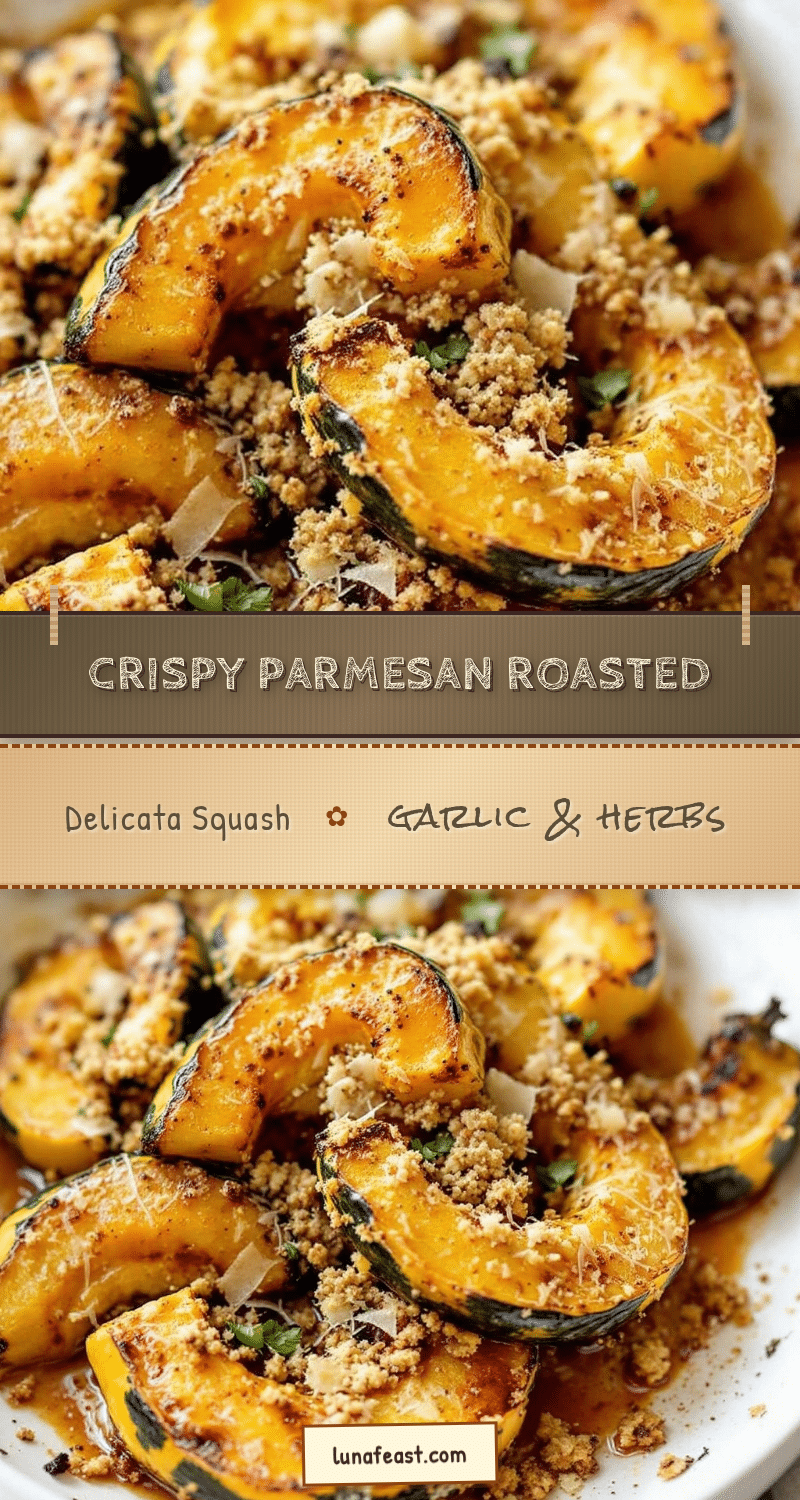
Crispy Parmesan Roasted Delicata Squash: Easy 30-Min Recipe
This crispy Parmesan roasted delicata squash is a quick and easy 30-minute side dish that delivers golden, cheesy edges and a creamy interior. It’s a crowd-pleasing fall recipe that feels fancy but takes almost no effort.
- Prep Time: 10 minutes
- Cook Time: 25 minutes
- Total Time: 35 minutes
- Yield: 4 servings 1x
- Category: Side Dish
- Cuisine: American
Ingredients
- 2 medium delicata squash (about 1.5 pounds total)
- ½ cup finely grated Parmesan cheese (preferably Parmigiano-Reggiano)
- 2 tablespoons extra-virgin olive oil
- ½ teaspoon garlic powder
- ½ teaspoon fine sea salt (or ¼ teaspoon table salt)
- ¼ teaspoon freshly ground black pepper
- 1 tablespoon fresh parsley or thyme, chopped (optional garnish)
Instructions
- Preheat your oven to 425°F (220°C). Position the rack in the middle of the oven. Line a baking sheet with parchment paper or foil.
- Wash the delicata squash thoroughly, pat dry, and cut off both ends. Slice in half lengthwise and scoop out the seeds and stringy pulp. Place each half cut-side down and slice crosswise into ½-inch thick half-moons.
- In a large bowl, combine the sliced squash, olive oil, garlic powder, salt, and pepper. Toss until every piece is evenly coated.
- Arrange the seasoned squash slices in a single layer on the prepared baking sheet. Do not overlap.
- Sprinkle the grated Parmesan evenly over the squash slices. Do not toss.
- Roast for 15 minutes. Remove the pan, flip each piece of squash gently, and return to the oven.
- Roast for another 10-15 minutes, until the squash is tender when pierced with a fork and the cheese is deep golden brown and crispy. Start checking at the 10-minute mark.
- Let the squash rest on the baking sheet for 2-3 minutes. Transfer to a serving platter, scraping up any crispy cheese bits. Garnish with fresh herbs if desired. Serve warm.
Notes
For extra crispy cheese, use finely grated fresh Parmesan and sprinkle it on top after arranging the squash on the pan. Don’t skip flipping the squash halfway through. Watch the cheese closely as it can burn quickly. If your oven runs hot, reduce temperature to 400°F (200°C) and add a few minutes to the cooking time.
Nutrition
- Serving Size: 1/4 of recipe
- Calories: 185
- Sugar: 4
- Sodium: 410
- Fat: 11
- Saturated Fat: 3
- Carbohydrates: 16
- Fiber: 3
- Protein: 8
Keywords: delicata squash, roasted squash, Parmesan squash, crispy squash, fall side dish, easy side dish, 30-minute recipe