My husband took his first bite of these crispy French onion soup stuffed baked potatoes and just stopped talking for a solid minute. He didn’t say a word, just stared at the fork like it had personally offended him in the best possible way. I honestly thought something was wrong at first—turns out he was trying to figure out how I managed to get that deep, caramelized onion flavor all the way through a potato. I had been messing around in the kitchen all afternoon, testing whether the classic flavors of French onion soup could actually work as a loaded potato situation. Let me tell you, the moment I pulled these out of the oven, I knew I had stumbled onto something pretty special.
These aren’t your average stuffed potatoes. We’re talking about a crispy, golden exterior that gives way to a fluffy, buttery interior, all loaded with slow-cooked caramelized onions, melty Gruyère cheese, and that rich, beefy broth flavor that makes French onion soup so addictive. The best part? That top layer gets all bubbly and browned under the broiler, just like the crust on a proper bowl of soup. (I may have burned my tongue on the first batch because I couldn’t wait for them to cool down. Worth it.)
This recipe came together because I had leftover caramelized onions from another project and a bag of russet potatoes that needed using up. Sometimes the best kitchen accidents turn into the things you end up craving for weeks. I’ve made these three times already this month, and I’m not even sorry about it. If you love French onion soup and you love baked potatoes, this is about to become your new favorite comfort food situation.
Why You’ll Love This Recipe
I’ve tested this recipe more times than I care to admit, and each batch taught me something new about getting that perfect balance of textures and flavors. Here’s why these potatoes are worth every minute of effort:
- Two Classics in One Bite – You get the soul-warming comfort of French onion soup combined with the satisfying heartiness of a loaded baked potato. It’s like your two favorite comfort foods had a delicious baby.
- Restaurant-Quality at Home – That deep, complex onion flavor usually takes hours of patience, but I’ve streamlined the process so you get maximum flavor without spending all day in the kitchen. The Gruyère cheese gets perfectly bubbly and golden under the broiler, just like the top of a proper French onion soup.
- Impressive Without Being Fussy – These potatoes look like something you’d order at a fancy bistro, but they’re surprisingly straightforward to put together. Perfect for when you want to impress dinner guests without breaking a sweat.
- Make-Ahead Friendly – You can caramelize the onions days in advance and even bake the potatoes ahead of time. This makes weeknight dinner feel like a special occasion with minimal last-minute effort.
- Customizable to Your Taste – Swap the cheese, add some protein, or adjust the toppings to suit your cravings. I’ve made versions with crispy bacon, and let me tell you, that’s a game-changer too.
This recipe isn’t just good—it’s the kind of meal that makes you close your eyes after the first bite. It’s comfort food reimagined, with the same soul-soothing satisfaction of French onion soup but in a completely new, incredibly satisfying form. Perfect for cozy nights in, impressing guests, or just treating yourself to something truly special.
What Ingredients You Will Need
This recipe uses simple, wholesome ingredients that come together to create something truly spectacular. Most of these are pantry staples or easy to find at any grocery store. Let me walk you through each one and share a few tips I’ve learned along the way.
For the Potatoes
- 4 large russet potatoes – Russets are your best bet here because they have that fluffy, starchy interior that bakes up perfectly. Look for potatoes that are roughly the same size so they cook evenly. I prefer organic when I can find them, but conventional works just fine.
- 2 tablespoons olive oil – This helps the skins get that gorgeous crispy texture. Regular olive oil works great, but you can use avocado oil if that’s what you have.
- 1 teaspoon kosher salt – Coarse salt sticks better to the oiled skins and gives you that satisfying salty crunch.
For the Caramelized Onions

- 3 large yellow onions – Yellow onions are the classic choice for French onion soup because they have the perfect balance of sweetness and savory depth. Sweet onions like Vidalia work too, but they’ll give you a slightly different flavor profile.
- 3 tablespoons unsalted butter – Butter adds richness and helps the onions develop that deep golden color. I use salted butter in a pinch and just adjust the added salt.
- 1 teaspoon fresh thyme leaves – Fresh thyme makes a noticeable difference here. Dried thyme works in a pinch, but use half the amount since dried herbs are more concentrated.
- 1 bay leaf – This adds a subtle herbal note that you’ll miss if you skip it. Remove it before stuffing the potatoes.
- ½ teaspoon salt – Helps draw out the moisture from the onions during cooking.
- ¼ teaspoon black pepper – Freshly ground is always better if you have it.
For the Filling
- 2 cups low-sodium beef broth – This is the backbone of that French onion soup flavor. Low-sodium is important so you can control the salt level. I recommend Swanson or Kitchen Basics for consistent results.
- 1 tablespoon Worcestershire sauce – Adds that umami depth that makes the filling taste like it’s been simmering for hours. Lea & Perrins is my go-to brand.
- 1 cup shredded Gruyère cheese – Gruyère is the classic French onion soup cheese. It melts beautifully and has that nutty, slightly sweet flavor that pairs perfectly with caramelized onions. You can substitute Swiss or provolone in a pinch.
- ½ cup shredded mozzarella cheese – This adds extra stretchiness and helps bind the filling together. Low-moisture mozzarella works best here.
- ¼ cup grated Parmesan cheese – Adds a salty, savory kick that complements the Gruyère beautifully. Freshly grated is worth the extra effort here.
For the Topping
- ½ cup shredded Gruyère cheese – Reserved for that gorgeous bubbly top layer.
- 2 tablespoons fresh parsley, chopped – For garnish and a pop of freshness. Chives work great too.
- Flaky sea salt – Optional but highly recommended for that final touch.
Equipment Needed
You don’t need any fancy equipment to pull these off, which is one of the reasons I love this recipe so much. Here’s what you’ll need:
- Baking sheet – A rimmed baking sheet works best to catch any drips from the potatoes. I use a half-sheet pan for even heat distribution.
- Large skillet or Dutch oven – A heavy-bottomed pan is crucial for caramelizing the onions properly. Cast iron or stainless steel both work great. Non-stick works but won’t give you quite as much browning.
- Sharp knife and cutting board – You’ll be slicing a lot of onions, so a sharp knife makes the job much easier and safer.
- Fork or potato masher – For mashing the potato interiors. A fork works perfectly fine if you don’t have a masher.
- Mixing bowl – For combining the filling ingredients. Any medium-sized bowl will do.
- Aluminum foil – For tenting the potatoes while they bake. Parchment paper works too if that’s what you have.
- Cooling rack – Optional but helpful for letting the baked potatoes cool slightly before handling.
Preparation Method
Let me walk you through this step by step. I’ve included all the little details I’ve learned from making these potatoes way too many times.
Step 1: Prepare and Bake the Potatoes
Preheat your oven to 400°F (200°C). Scrub the potatoes thoroughly under cold water and pat them completely dry with a clean kitchen towel. Piercing the potatoes with a fork about 6-8 times each—this lets steam escape and prevents any potato explosions in your oven. (Yes, I learned this the hard way.)
Rub each potato with about ½ tablespoon of olive oil, making sure to coat the entire surface. Sprinkle generously with kosher salt. Place the potatoes directly on the oven rack with a baking sheet on the rack below to catch any drips. Bake for 50-60 minutes, or until the skins are crispy and a fork slides easily into the center. The internal temperature should reach about 205°F (96°C) for perfectly fluffy interiors.
Step 2: Caramelize the Onions
While the potatoes are baking, start on the onions. Slice the onions thinly—about ¼-inch thick. I like to cut them in half through the root end first, then slice crosswise. This gives you nice even strips that cook evenly.
Heat a large skillet or Dutch oven over medium heat and add the butter. Once it’s melted and foaming, add the sliced onions, thyme leaves, bay leaf, salt, and pepper. Stir to coat everything in the butter. Cook for about 5 minutes, stirring occasionally, until the onions start to soften and turn translucent.
Reduce the heat to medium-low and continue cooking, stirring every 5-7 minutes. You’re looking for a deep golden brown color, which usually takes about 30-40 minutes total. Don’t rush this step—low and slow is the secret to truly caramelized onions. If they start to stick or look dry, add a splash of water or beef broth to deglaze the pan.
Step 3: Build the French Onion Filling
Once the onions are beautifully caramelized, remove the bay leaf. Pour in the beef broth and Worcestershire sauce, scraping up any browned bits from the bottom of the pan. Let this simmer for about 5 minutes, until the liquid has reduced slightly and the mixture looks rich and glossy.
Remove the pan from heat and let it cool for a few minutes. Stir in the Gruyère, mozzarella, and Parmesan cheeses until they’re just starting to melt. The residual heat from the onion mixture will do the work here—you don’t want the cheese to fully melt yet because it’ll melt again in the oven.
Step 4: Scoop and Stuff
Once the potatoes are cool enough to handle (about 10 minutes), carefully slice off the top third of each potato lengthwise. Use a spoon to scoop out the fluffy interior, leaving about a ¼-inch thick shell. Be gentle—you want the potato skins to stay intact so they can hold all that delicious filling.
Place the scooped-out potato flesh in a mixing bowl and mash it lightly with a fork. Add about half of the French onion mixture to the mashed potato and stir to combine. This step ensures every bite has that incredible flavor throughout the filling, not just on top.
Step 5: Fill and Top
Spoon the potato-onion mixture back into the potato skins, mounding it slightly. Top each potato with the remaining French onion mixture, making sure to get plenty of those caramelized onions and melted cheese in every potato. Sprinkle the reserved Gruyère cheese evenly over the top of each potato.
Step 6: Final Bake and Broil
Return the stuffed potatoes to the baking sheet and bake at 400°F (200°C) for 15-20 minutes, until the filling is hot and bubbly. Then switch your oven to broil and cook for 2-3 more minutes, watching carefully, until the cheese is golden brown and crispy on top. This broiling step is what gives you that iconic French onion soup crust—don’t skip it!
Let the potatoes rest for about 5 minutes before serving. Sprinkle with fresh parsley and a pinch of flaky sea salt if you’re feeling fancy.
Cooking Tips & Techniques
I’ve made plenty of mistakes so you don’t have to. Here are the things I wish someone had told me before my first attempt:
- Don’t rush the onions – This is the most important tip I can give you. Proper caramelization takes time—at least 30 minutes. If you crank up the heat to speed things up, you’ll end up with burnt, bitter onions instead of sweet, deeply flavored ones. Trust the process and be patient.
- Use room temperature ingredients – Let your potatoes cool slightly before handling, but don’t let them get completely cold. Warm potatoes are easier to scoop and mash, and the filling comes together more smoothly when everything is at a similar temperature.
- Double check your potato doneness – Undercooked potatoes are the enemy of a good stuffed potato. They should be completely tender all the way through. If you’re unsure, give them an extra 5-10 minutes. There’s no such thing as too soft when it comes to baked potatoes.
- Watch the broiler like a hawk – That golden cheese crust can go from perfect to burnt in about 30 seconds. Stay nearby and check frequently. I’ve ruined more than one batch by getting distracted.
- Season as you go – The potatoes need salt, the onions need salt, and the filling needs salt. Don’t just add all your seasoning at the end. Layering the salt throughout the cooking process gives you much better flavor.
Variations & Adaptations
One of the best things about this recipe is how easily it adapts to different tastes and dietary needs. Here are some variations I’ve tested and loved:
- Vegetarian Version – Use vegetable broth instead of beef broth and add a splash of soy sauce or tamari for that umami depth. The flavor will be slightly different but still absolutely delicious.
- Add Some Protein – Crispy bacon bits or shredded rotisserie chicken stirred into the filling make this a heartier meal. I’ve also tried it with leftover pot roast, and let me tell you, that was next-level good.
- Cheese Swaps – If you can’t find Gruyère, Swiss cheese or provolone are excellent substitutes. For a sharper flavor, try aged cheddar or Gouda. Just avoid pre-shredded cheese if you can—it doesn’t melt as smoothly.
- Gluten-Free Adaptation – This recipe is naturally gluten-free as written, but double-check your Worcestershire sauce and beef broth labels to make sure they’re certified gluten-free if that’s a concern.
- Make It Spicy – Add a pinch of red pepper flakes to the caramelizing onions or top with some pickled jalapeños before serving. The heat cuts through the richness beautifully.
Serving & Storage Suggestions
These potatoes are best served hot, right after that final broil. The contrast between the crispy cheese top, the creamy filling, and the tender potato skin is absolutely perfect at that moment. Here’s how to make the most of them:
- Serving Temperature – Serve immediately while the cheese is still bubbly and the filling is hot. Let them rest for 5 minutes so nobody burns their mouth, but don’t let them sit too long.
- What to Serve With – A simple green salad with a tangy vinaigrette is the perfect side dish to cut through the richness. I also love serving these alongside a bowl of creamy crockpot white chicken chili for a cozy dinner spread. For a lighter option, try them with crispy air fryer brussels sprouts with balsamic glaze.
- Storage – Store leftover stuffed potatoes in an airtight container in the refrigerator for up to 4 days. The flavors actually meld together even more overnight, so leftovers are fantastic.
- Reheating – For best results, reheat in a 350°F (175°C) oven for about 15-20 minutes, or until heated through. The microwave works in a pinch but will make the crispy top soft. If using the oven, you can broil for the last minute to re-crisp the cheese.
- Freezing – You can freeze the fully assembled (but unbaked) potatoes for up to 3 months. Wrap each potato individually in plastic wrap, then place in a freezer bag. To cook from frozen, add about 15 minutes to the baking time.
Nutritional Information & Benefits
While these potatoes are definitely a comfort food indulgence, they do have some redeeming qualities. Here’s a rough breakdown per serving (based on one large stuffed potato):
- Calories: Approximately 520-580 calories
- Protein: 22-26 grams (thanks to the cheese and potato protein)
- Carbohydrates: 48-55 grams (mostly from the potatoes)
- Fat: 28-32 grams (from butter, cheese, and olive oil)
- Fiber: 5-7 grams (potato skins are a great source of fiber)
- Calcium: 35-40% of your daily needs (hello, Gruyère cheese)
- Vitamin C: About 30% of your daily needs from the potatoes
Potatoes get a bad rap sometimes, but they’re actually packed with potassium, vitamin C, and fiber—especially if you eat the skins. The caramelized onions add antioxidants and prebiotic fiber that support gut health. And the cheese provides calcium and protein that help keep you feeling satisfied. This is comfort food that actually has some nutritional merit, which makes me feel a little better about going back for seconds.
Conclusion
These crispy French onion soup stuffed baked potatoes are the kind of recipe that makes you look forward to dinner all day long. They take a little bit of time and patience, but every single step is worth it when you take that first bite and get hit with layers of flavor—the sweet caramelized onions, the nutty melted Gruyère, the rich beefy broth, and that perfectly crispy potato skin.
I love this recipe because it feels fancy without being fussy. It’s impressive enough for company but simple enough for a regular Tuesday night. And honestly, there’s something deeply satisfying about turning humble ingredients like potatoes and onions into something that tastes this special. If you’re looking for another cozy, crowd-pleasing dish, you might also enjoy this cozy baked ziti with Italian sausage for another night when you need serious comfort food.
I’d love to hear how these turn out for you! Leave a comment below and let me know if you tried any fun variations or if these became a new favorite in your house. Don’t forget to share this recipe with someone who loves French onion soup as much as you do—they’ll thank you later.
Frequently Asked Questions
Can I make these potatoes ahead of time for a party?
Absolutely! You can prepare the potatoes through step 4, then cover and refrigerate for up to 24 hours. When you’re ready to serve, simply add the topping and bake as directed, adding about 10 minutes to the baking time since you’re starting from cold.
Can I use sweet potatoes instead of russets?
Yes, but the texture will be different. Sweet potatoes are denser and sweeter, which changes the flavor profile. If you try it, I recommend reducing the salt slightly and adding a pinch of smoked paprika to balance the sweetness.
My onions are taking forever to caramelize. What am I doing wrong?
You’re probably not doing anything wrong! Caramelizing onions takes patience. But if they’re really taking longer than 45 minutes, your heat might be too low. Try increasing the heat to medium and stirring more frequently. Also, make sure you’re using enough butter—it helps conduct heat and prevents sticking.
Can I make this recipe dairy-free?
You can! Use vegan butter or olive oil for the onions, and substitute the cheeses with your favorite dairy-free alternatives. I’ve had good results with cashew-based mozzarella and nutritional yeast for that cheesy flavor. Just note that the texture won’t be quite as stretchy, but it’s still delicious.
How do I get the potato skins extra crispy?
The secret is making sure the potatoes are completely dry before oiling them, and using enough oil to coat every surface. Baking them directly on the oven rack (with a tray below to catch drips) also helps air circulate and crisp up the skins. Don’t wrap them in foil—that traps steam and makes the skins soft.
Pin This Recipe!
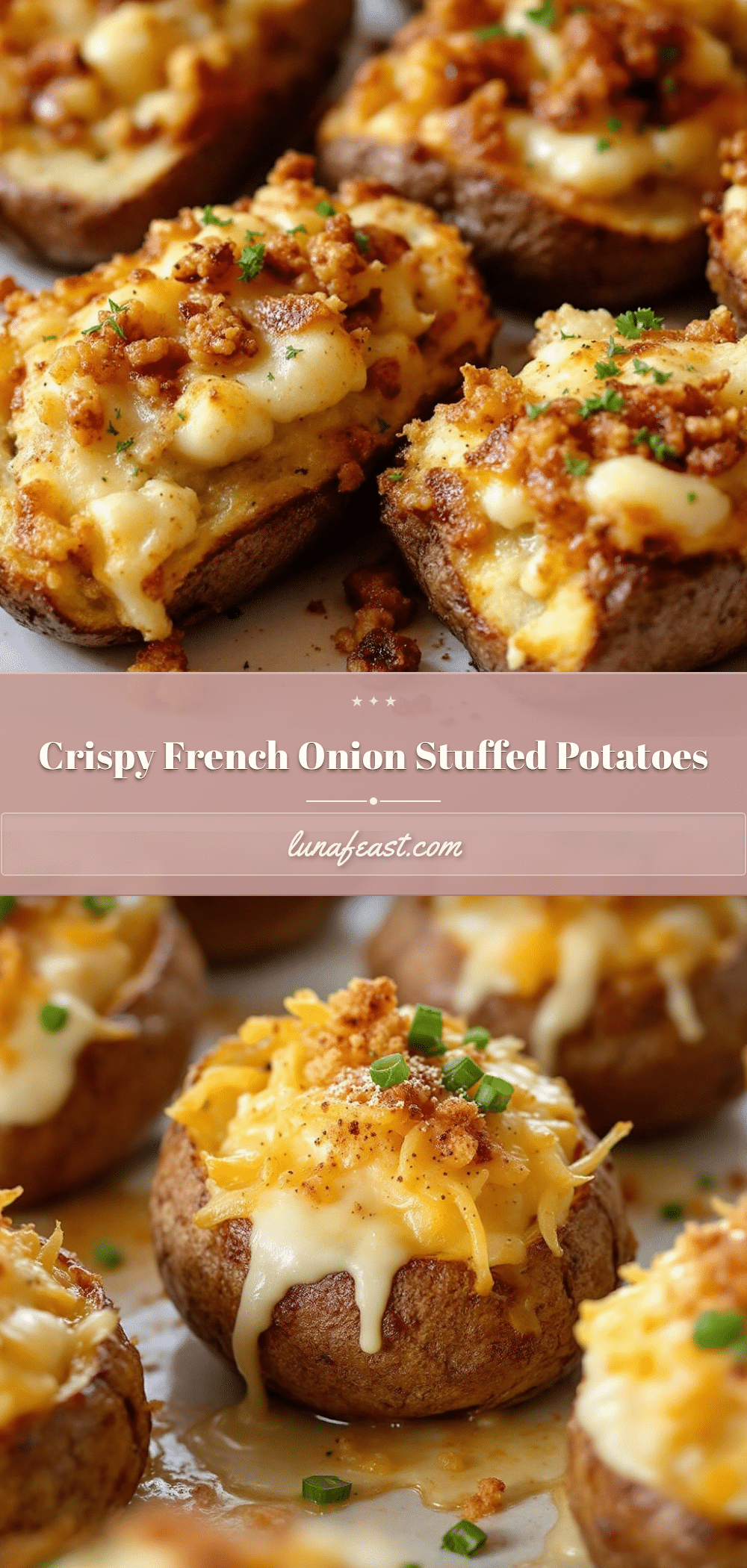
Crispy French Onion Soup Stuffed Baked Potatoes

These crispy French onion soup stuffed baked potatoes combine the soul-warming comfort of French onion soup with the satisfying heartiness of a loaded baked potato. A crispy, golden exterior gives way to a fluffy, buttery interior loaded with slow-cooked caramelized onions, melty Gruyère cheese, and rich beefy broth flavor.
- Prep Time: 20 minutes
- Cook Time: 1 hour 30 minutes
- Total Time: 1 hour 50 minutes
- Yield: 4 servings 1x
- Category: Main Course
- Cuisine: French-American
Ingredients
- 4 large russet potatoes
- 2 tablespoons olive oil
- 1 teaspoon kosher salt
- 3 large yellow onions
- 3 tablespoons unsalted butter
- 1 teaspoon fresh thyme leaves
- 1 bay leaf
- ½ teaspoon salt
- ¼ teaspoon black pepper
- 2 cups low-sodium beef broth
- 1 tablespoon Worcestershire sauce
- 1 cup shredded Gruyère cheese
- ½ cup shredded mozzarella cheese
- ¼ cup grated Parmesan cheese
- ½ cup shredded Gruyère cheese (for topping)
- 2 tablespoons fresh parsley, chopped
- Flaky sea salt (optional)
Instructions
- Preheat oven to 400°F (200°C). Scrub potatoes, pat dry, pierce with fork 6-8 times each. Rub each potato with ½ tablespoon olive oil and sprinkle with kosher salt. Place directly on oven rack with a baking sheet below to catch drips. Bake 50-60 minutes until skins are crispy and fork-tender (internal temp ~205°F/96°C).
- While potatoes bake, slice onions thinly (about ¼-inch thick). Heat a large skillet or Dutch oven over medium heat, add butter. Once melted and foaming, add onions, thyme, bay leaf, salt, and pepper. Cook 5 minutes until onions soften. Reduce heat to medium-low and cook 30-40 minutes, stirring every 5-7 minutes, until deep golden brown. Add splash of water or broth if sticking.
- Remove bay leaf from caramelized onions. Pour in beef broth and Worcestershire sauce, scraping up browned bits. Simmer 5 minutes until slightly reduced and glossy. Remove from heat, let cool a few minutes. Stir in 1 cup Gruyère, mozzarella, and Parmesan until just starting to melt.
- Let baked potatoes cool about 10 minutes. Slice off top third lengthwise. Scoop out fluffy interior, leaving ¼-inch thick shell. Place potato flesh in a mixing bowl and mash lightly with a fork. Add half of the French onion mixture and stir to combine.
- Spoon potato-onion mixture back into potato skins, mounding slightly. Top with remaining French onion mixture. Sprinkle reserved ½ cup Gruyère evenly over each potato.
- Return stuffed potatoes to baking sheet. Bake at 400°F (200°C) for 15-20 minutes until hot and bubbly. Switch oven to broil and cook 2-3 minutes until cheese is golden brown and crispy. Let rest 5 minutes. Sprinkle with parsley and flaky sea salt if desired.
Notes
Don’t rush the onions—proper caramelization takes at least 30 minutes. Use room temperature ingredients for easier handling. Watch the broiler closely to prevent burning. Season as you go for layered flavor. For extra crispy skins, ensure potatoes are completely dry before oiling and bake directly on oven rack without foil.
Nutrition
- Serving Size: 1 large stuffed pota
- Calories: 550
- Sugar: 8
- Sodium: 800
- Fat: 30
- Saturated Fat: 15
- Carbohydrates: 52
- Fiber: 6
- Protein: 24
Keywords: French onion soup, stuffed potatoes, baked potatoes, caramelized onions, Gruyère cheese, comfort food, loaded potatoes