“Are you sure this is going to work?” I asked myself, eyeing the loose pile of dough that seemed more like a crumbly mess than a pastry crust. Honestly, I wasn’t expecting much the first time I made this Perfect Quiche Lorraine with Buttery Flaky Crust. I’d always been a little skeptical about homemade crusts—too fiddly, too easy to overwork, and frankly, I was more of a “grab a frozen pie shell” kind of cook. But that afternoon, with an unexpected quiet kitchen and a few slices of smoky bacon begging for a purpose, I gave it a shot.
As the quiche baked, the buttery aroma curled through the air, pulling me back to the stove every few minutes like a moth to a flame. When I finally sliced into the golden crust, the layers flaked apart with just the right crispness, revealing a creamy, custardy filling speckled with caramelized onions and that perfect hint of nutmeg. It was comfort food with a little bit of finesse—unexpectedly easy, surprisingly elegant.
That first bite made me realize this wasn’t just another quiche recipe—it was the one I’d keep coming back to whenever I wanted something both cozy and a little special. If you can’t resist that rich, flaky crust and crave a quiche that holds its own at brunch or a casual dinner, you’re in the right place. This recipe has stuck with me because it’s the kind of dish that feels like a warm hug but also makes you feel like you spent way more time in the kitchen than you actually did.
Why You’ll Love This Recipe
This Perfect Quiche Lorraine with Buttery Flaky Crust has earned its spot in my regular rotation for plenty of reasons—trust me, I’ve made this dish enough times to count on one hand (and then some!). Here’s why it’s worth your attention:
- Quick & Easy: The crust comes together in under 30 minutes, and the filling is a simple mix—perfect for busy mornings or last-minute dinner guests.
- Simple Ingredients: No specialty items or hard-to-find bits. You probably have most of these in your pantry and fridge already.
- Perfect for Brunch or Cozy Dinners: Whether it’s a lazy weekend brunch or a weeknight comfort meal, this quiche fits the bill.
- Crowd-Pleaser: I’ve served this to skeptics and enthusiasts alike—and it always disappears fast.
- Unbelievably Delicious: The buttery, flaky crust paired with a rich, savory custard is just the right kind of indulgence without being heavy.
What makes this recipe stand out is the balance—it’s flaky but not crumbly, creamy but not soggy, and packed with flavor without overwhelming the palate. A little tip I picked up was folding the butter into the flour in small cubes, which gives that signature flakiness you want without fuss. Plus, adding a touch of nutmeg to the custard mix adds a subtle warmth you’ll notice but can’t put your finger on.
Honestly, this quiche is the kind that has you closing your eyes after the first bite because it hits that perfect spot between comfort food and something a bit special. If you like recipes that feel like a treat but don’t require all day in the kitchen, this one’s for you.
What Ingredients You Will Need
This recipe uses simple, wholesome ingredients to deliver bold flavor and satisfying texture without the fuss. Most of these are pantry staples, and I’ll share a few tips on picking the best versions for your quiche.
- For the Crust:
- All-purpose flour, 1 1/4 cups (150 g) – I prefer King Arthur Flour for consistent results
- Unsalted butter, 1/2 cup (113 g), cold and cut into small cubes (this is what makes the crust buttery and flaky)
- Cold water, 3 to 4 tablespoons (45-60 ml)
- Salt, 1/4 teaspoon (a pinch to balance flavors)
- For the Filling:
- Bacon, 6 slices, diced and cooked until crisp (smoky and savory backbone)
- Shallots or yellow onions, 1 small, finely chopped (caramelizes beautifully)
- Gruyère cheese, 1 cup shredded (about 100 g) – nutty and melts perfectly
- Large eggs, 3 (room temperature for better custard)
- Heavy cream, 1 cup (240 ml) – use half-and-half for a lighter version
- Whole milk, 1/2 cup (120 ml)
- Freshly ground black pepper, to taste
- Salt, to taste
- Freshly grated nutmeg, 1/4 teaspoon (optional but adds warmth)
For substitutions, you can swap the Gruyère with Emmental or Swiss cheese, and the bacon with smoked turkey for a leaner option. If you need a dairy-free crust, using a vegan butter works well, but the texture will be slightly different. When it comes to the cream, I’ve tried using coconut cream in a pinch, which gives a unique twist but keep in mind it’s a flavor shift.
Equipment Needed
- 9-inch (23 cm) pie dish or tart pan – I like using a glass pie dish for even baking and easy monitoring
- Mixing bowls – one large for dough, one for custard mix
- Pastry cutter or two knives for cutting butter into flour (a food processor speeds this up if you have one)
- Rolling pin – essential for getting that thin, even crust
- Whisk and fork – for mixing eggs and custard ingredients
- Skillet – to cook bacon and shallots
- Measuring cups and spoons
If you don’t have a pastry cutter, no worries! I often use my hands to quickly rub butter into flour, but keep everything cold to avoid melting the butter. A silicone baking mat or parchment paper helps when rolling out the dough to prevent sticking.
Preparation Method
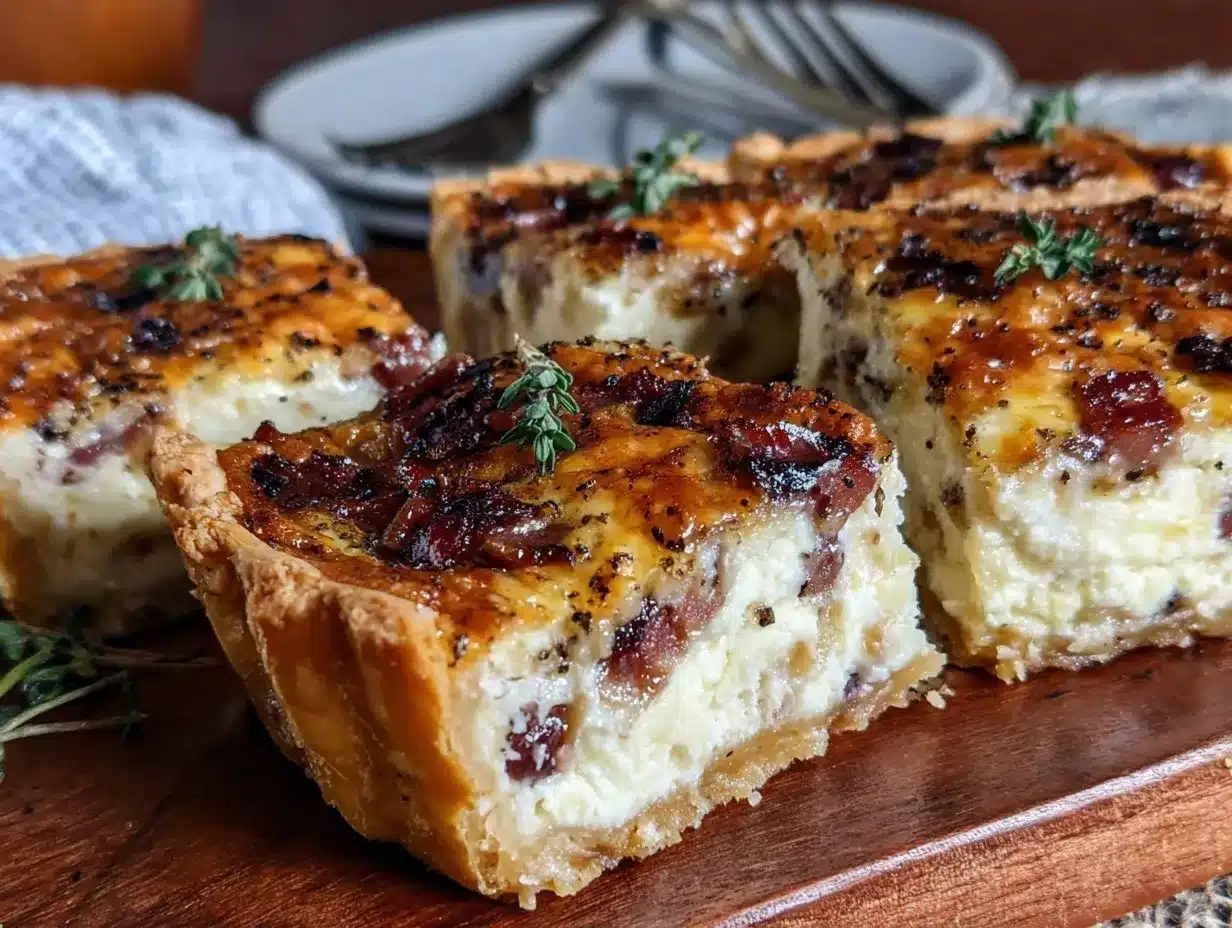
- Make the Crust: In a large bowl, combine 1 1/4 cups (150 g) all-purpose flour and 1/4 teaspoon salt. Add the cold cubed butter and use a pastry cutter (or two knives) to cut it into the flour until the mixture resembles coarse crumbs with pea-sized bits. This usually takes about 3-5 minutes.
- Add Cold Water: Sprinkle 3 tablespoons (45 ml) of ice-cold water over the mixture. Using a fork, gently toss until the dough begins to hold together. If it’s too dry, add the extra tablespoon (15 ml) of water. Be careful not to overwork the dough; it should just come together.
- Chill the Dough: Shape the dough into a disk, wrap it in plastic, and refrigerate for at least 30 minutes. This resting time helps the butter solidify again, which is key for flakiness.
- Prepare the Filling: While the dough chills, cook the diced bacon in a skillet over medium heat until crisp, about 6-8 minutes. Remove with a slotted spoon to drain on paper towels. In the same skillet, add the chopped shallots and cook in the rendered bacon fat until soft and golden, about 3-4 minutes. Set aside.
- Roll Out the Dough: On a lightly floured surface, roll the dough out into a 12-inch (30 cm) circle, about 1/8 inch (3 mm) thick. Carefully transfer it to your 9-inch (23 cm) pie dish, pressing it gently into the edges. Trim excess dough and crimp the edges as you like. Chill again for 15 minutes to avoid shrinkage during baking.
- Blind Bake the Crust: Preheat your oven to 375°F (190°C). Line the crust with parchment paper and fill with pie weights or dried beans. Bake for 15 minutes, then remove the weights and parchment and bake an additional 5 minutes until the crust is lightly golden. This step prevents a soggy bottom.
- Mix the Custard: In a bowl, whisk together 3 large eggs, 1 cup (240 ml) heavy cream, 1/2 cup (120 ml) whole milk, 1/4 teaspoon freshly grated nutmeg, salt, and pepper to taste. The mixture should be smooth and slightly thick.
- Assemble the Quiche: Sprinkle the cooked bacon, shallots, and 1 cup (100 g) shredded Gruyère evenly over the pre-baked crust. Pour the custard mixture over the filling carefully.
- Bake: Place the quiche in the oven and bake for 35-40 minutes, or until the custard is set but still slightly jiggly in the center. A toothpick inserted should come out clean.
- Cool and Serve: Let the quiche cool for at least 10 minutes before slicing. This resting helps the filling firm up and enhances flavors.
Cooking Tips & Techniques
One of the trickiest parts of a great quiche is the crust—if you’ve ever had a soggy bottom, you know what I mean. Blind baking the crust is a must; it seals the dough and keeps it crisp. Also, keeping your butter cold prevents it from melting into the flour too soon, which preserves the flaky layers.
When mixing the custard, don’t overbeat the eggs. A gentle whisk combined with cream and milk gives a silky texture. Overmixing can lead to a rubbery quiche, which nobody wants.
Another tip: let the quiche rest after baking. It’s tempting to dig in right away, but cooling helps the custard set perfectly and makes slicing easier. I learned this the hard way after a few runny disasters.
For timing, cook your bacon and shallots ahead so they’re cool when added to the custard. Hot ingredients can start cooking the eggs prematurely, which messes with texture.
Finally, when rolling the dough, flour your surface lightly but avoid over-flouring, which can dry out the crust. Using parchment paper to roll out the dough keeps things tidy and helps you transfer it to the pan without tears.
Variations & Adaptations
This quiche is wonderfully versatile, and I’ve played around with it quite a bit. Here are a few ways to switch things up:
- Vegetarian: Skip the bacon and use sautéed mushrooms, spinach, or roasted red peppers for a veggie-packed version.
- Seasonal Cheese: Swap Gruyère for sharp cheddar or goat cheese depending on what you have or the season.
- Gluten-Free: Use a gluten-free flour blend in the crust. I recommend one made specifically for pastries to keep the texture close to traditional.
- Crustless: For a low-carb twist, skip the crust and bake the filling in a well-greased dish, adjusting baking time slightly.
- Herbs & Spices: Add fresh thyme, chives, or tarragon to the custard for added aroma and flavor.
Personally, I once tried a version with caramelized leeks instead of shallots, and it turned out beautifully rich and sweet. If you enjoy experimenting, you might also appreciate my collection of other creative recipes that celebrate seasonal ingredients.
Serving & Storage Suggestions
This quiche is best served warm or at room temperature. I like to slice it into wedges and pair it with a crisp green salad dressed lightly with lemon vinaigrette. A glass of chilled white wine or sparkling water with a twist of citrus makes a great accompaniment.
Leftovers can be stored in an airtight container in the refrigerator for up to 3 days. To reheat, pop individual slices in the oven at 350°F (175°C) for about 10 minutes to bring back that flaky crust crispness. Microwaving works in a pinch but tends to make the crust softer.
Interestingly, the flavors deepen overnight, especially if you add fresh herbs right before serving. If you want to prepare ahead for a brunch, this quiche holds up well and even tastes better the next day.
Nutritional Information & Benefits
Each serving of this quiche (assuming 6 servings) contains approximately:
| Calories | 350-400 kcal |
|---|---|
| Protein | 15 g |
| Fat | 28 g |
| Carbohydrates | 15 g |
This dish offers a good balance of protein and fat, mainly from the eggs, cheese, and bacon, which can keep you satisfied for hours. The butter in the crust provides richness, but since the recipe is portion-controlled, it doesn’t feel overly indulgent.
For those who need to manage gluten intake, switching to gluten-free flour makes this a feasible option. While it’s not low-fat, the recipe’s wholesome ingredients mean you’re getting nutrition alongside comfort. Plus, the nutmeg offers subtle antioxidant properties, and the eggs supply essential vitamins and minerals.
Conclusion
Making the Perfect Quiche Lorraine with Buttery Flaky Crust might sound intimidating, but it’s a recipe that rewards patience with delicious, flaky, creamy results every time. Whether you’re feeding a crowd or just treating yourself, it’s a dish that combines simplicity and sophistication effortlessly.
Feel free to tweak the filling to match your mood or pantry, and don’t be shy about taking shortcuts with the crust if you’re pressed for time—this recipe adapts well. I love this quiche because it brings a bit of warmth and comfort to any table, and it’s one of those dishes where a little goes a long way.
Let me know how your quiche turns out, and if you have your own spin on this classic, I’d love to hear. After all, cooking is as much about sharing stories as it is about food!
Frequently Asked Questions
Can I make the crust ahead of time?
Yes! You can prepare the dough and refrigerate it for up to 2 days or freeze it for up to a month. Just thaw it in the fridge overnight before rolling out.
What can I use instead of bacon?
Smoked turkey, ham, or even vegetarian bacon strips work well. For a vegetarian option, try sautéed mushrooms or spinach.
How do I prevent a soggy crust?
Blind baking the crust before adding the filling is key. Make sure to use pie weights and remove them partway through baking to set the crust.
Can I freeze the quiche after baking?
Absolutely. Wrap it tightly in plastic wrap and foil, then freeze for up to 2 months. Reheat in the oven for best texture.
What’s the best cheese for Quiche Lorraine?
Gruyère is traditional and melts beautifully, but Emmental, Swiss, or even sharp cheddar can be tasty alternatives depending on your preference.
Pin This Recipe!
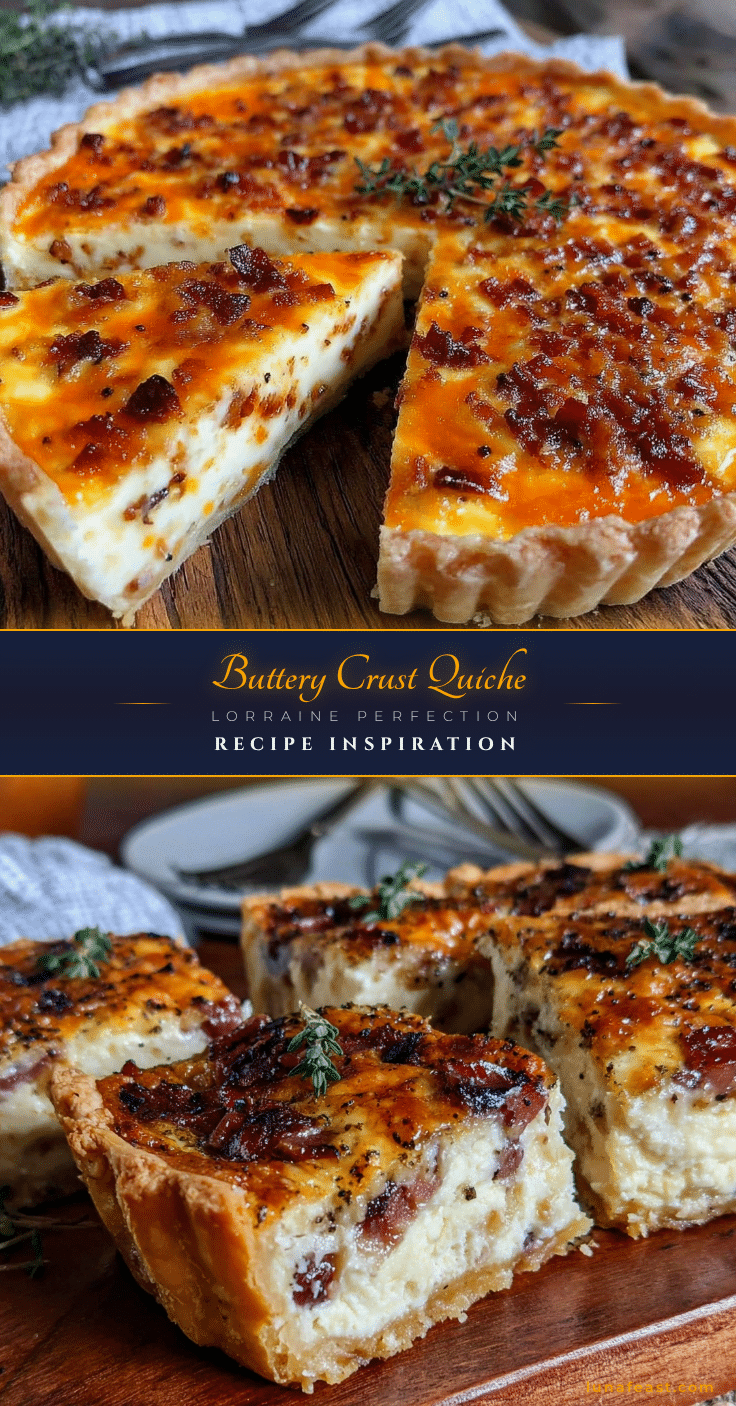
Perfect Quiche Lorraine Recipe Easy Homemade Flaky Crust Tips

A classic Quiche Lorraine with a buttery, flaky homemade crust and a rich, savory custard filling featuring smoky bacon, caramelized onions, and Gruyère cheese. Perfect for brunch or cozy dinners, this recipe balances simplicity and elegance.
- Prep Time: 30 minutes
- Cook Time: 45 minutes
- Total Time: 1 hour 15 minutes
- Yield: 6 servings 1x
- Category: Main Course
- Cuisine: French
Ingredients
- 1 1/4 cups (150 g) all-purpose flour
- 1/2 cup (113 g) unsalted butter, cold and cut into small cubes
- 3 to 4 tablespoons (45–60 ml) cold water
- 1/4 teaspoon salt
- 6 slices bacon, diced and cooked until crisp
- 1 small shallot or yellow onion, finely chopped
- 1 cup (100 g) shredded Gruyère cheese
- 3 large eggs, room temperature
- 1 cup (240 ml) heavy cream
- 1/2 cup (120 ml) whole milk
- Freshly ground black pepper, to taste
- Salt, to taste
- 1/4 teaspoon freshly grated nutmeg (optional)
Instructions
- Make the Crust: In a large bowl, combine 1 1/4 cups all-purpose flour and 1/4 teaspoon salt. Add the cold cubed butter and cut it into the flour using a pastry cutter or two knives until the mixture resembles coarse crumbs with pea-sized bits (3-5 minutes).
- Add Cold Water: Sprinkle 3 tablespoons of ice-cold water over the mixture. Gently toss with a fork until the dough begins to hold together. Add the extra tablespoon if too dry. Avoid overworking the dough.
- Chill the Dough: Shape the dough into a disk, wrap in plastic, and refrigerate for at least 30 minutes.
- Prepare the Filling: Cook diced bacon in a skillet over medium heat until crisp (6-8 minutes). Remove and drain. In the same skillet, cook chopped shallots in bacon fat until soft and golden (3-4 minutes). Set aside.
- Roll Out the Dough: On a lightly floured surface, roll dough into a 12-inch circle about 1/8 inch thick. Transfer to a 9-inch pie dish, press into edges, trim excess, and crimp edges. Chill for 15 minutes.
- Blind Bake the Crust: Preheat oven to 375°F (190°C). Line crust with parchment paper and fill with pie weights or dried beans. Bake 15 minutes, remove weights and parchment, bake 5 more minutes until lightly golden.
- Mix the Custard: Whisk together 3 eggs, 1 cup heavy cream, 1/2 cup whole milk, 1/4 teaspoon nutmeg, salt, and pepper until smooth and slightly thick.
- Assemble the Quiche: Sprinkle cooked bacon, shallots, and shredded Gruyère evenly over crust. Pour custard mixture over filling.
- Bake: Bake quiche for 35-40 minutes until custard is set but slightly jiggly in center. Toothpick should come out clean.
- Cool and Serve: Let quiche cool at least 10 minutes before slicing to allow filling to firm up.
Notes
Blind baking the crust is essential to prevent sogginess. Keep butter cold to ensure flakiness. Do not overmix custard to avoid rubbery texture. Let quiche rest before slicing for best results. Use parchment paper when rolling dough to prevent sticking.
Nutrition
- Serving Size: 1 slice (1/6 of quic
- Calories: 375
- Sugar: 1
- Sodium: 450
- Fat: 28
- Saturated Fat: 16
- Carbohydrates: 15
- Fiber: 1
- Protein: 15
Keywords: Quiche Lorraine, homemade quiche, flaky crust, brunch recipe, savory custard, bacon quiche, easy quiche, classic French quiche