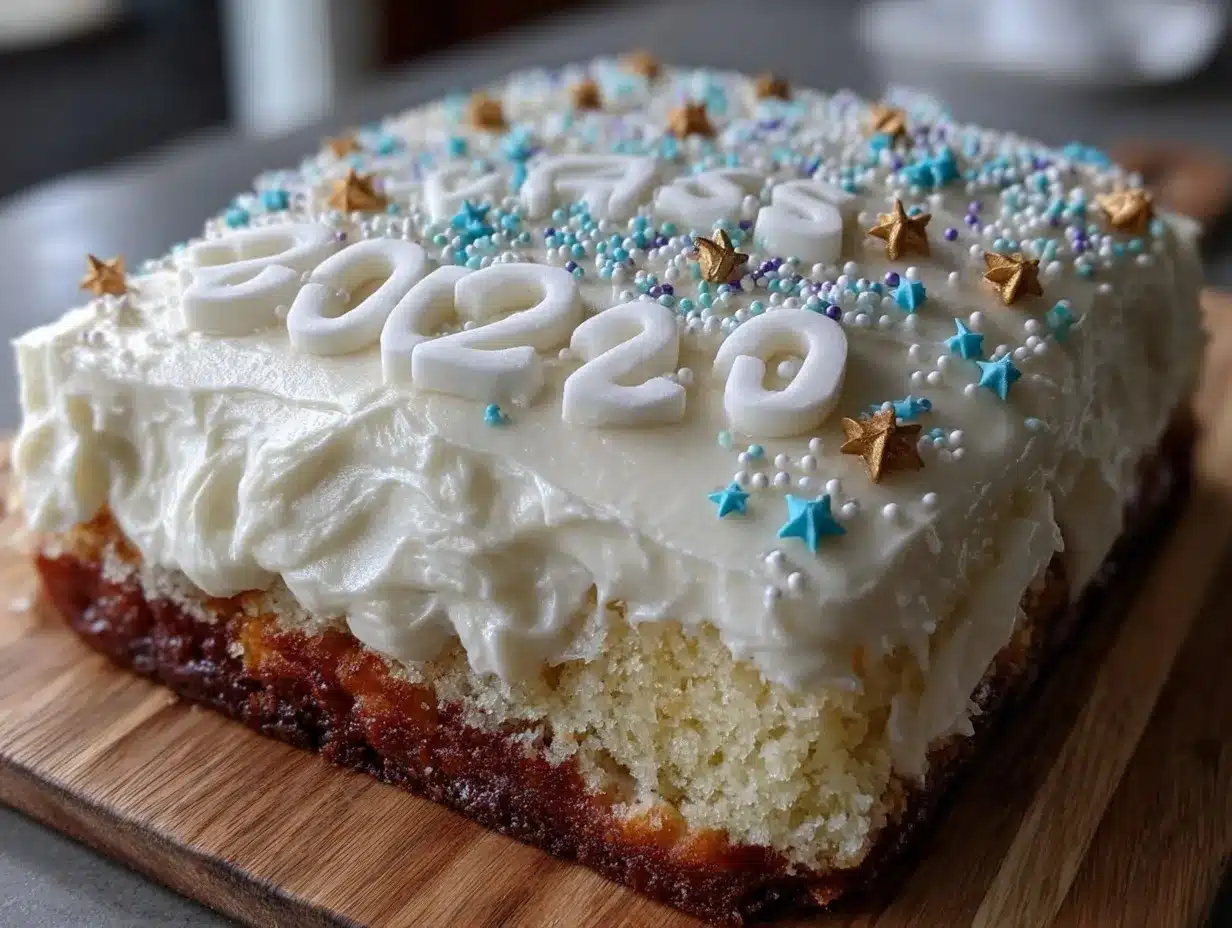
“Are you sure this is going to work?” I muttered under my breath, nervously smoothing out the last patch of fondant on what was supposed to be a “simple” Class of 2026 graduation sheet cake. Honestly, I wasn’t aiming for perfection that day—just something decent enough for the celebration—and yet, the cake turned out to be a quiet star. The way the smooth white fondant contrasted with the crisp gold lettering and delicate floral accents made me pause. It reminded me how sometimes the best recipes come together in moments of low expectations and a little creative improvisation.
The memory is vivid: the kitchen smelled faintly of vanilla and almond, a soft hum of chatter from the backyard where the party was underway. My hands were slightly trembling—not from nerves, but from that blend of excitement and doubt when you try something new. This Perfect Class of 2026 Sheet Cake with Elegant Fondant Design became more than just dessert; it was a centerpiece that sparked compliments and a few shy requests for the recipe. That cake taught me the charm of patience, the value of simple ingredients, and how even a novice like me could pull off an elegant look with a bit of practice.
It wasn’t flashy or over-the-top, but it carried a quiet confidence, much like the graduates it honored. That’s why this recipe has stuck around and why I keep making it when friends ask for a cake that’s both approachable and impressively polished. If you’re wondering how to get that smooth fondant finish without the drama or how to bake a moist sheet cake that holds up under all that decoration, you might find yourself nodding along with this one—because it’s all about balance, and a little bit of heart.
Why You’ll Love This Recipe
This Perfect Class of 2026 Sheet Cake with Elegant Fondant Design has earned its place in my baking rotation for a bunch of reasons that go beyond just looking good. I’ve tested it multiple times—trust me, it’s been a bit of an obsession phase—and it consistently delivers that wow-factor without stress.
- Quick & Easy: The cake batter comes together in under 20 minutes, making it ideal for last-minute celebrations or when you suddenly realize you need a crowd-pleasing dessert.
- Simple Ingredients: You won’t need to hunt down anything fancy. Most items are pantry staples, and the fondant is straightforward to work with once you get the hang of it.
- Perfect for Graduation Parties: The design lends itself beautifully to milestone celebrations, making it a standout at any Class of 2026 event or similar gatherings.
- Crowd-Pleaser: The moist texture and balanced sweetness mean kids and adults alike keep asking for seconds.
- Elegant But Approachable: The key is in the fondant technique—smooth, clean, and sophisticated without needing professional skills or hours of work.
Unlike other sheet cakes that sometimes feel dry or too heavy, this one strikes a balance between light crumb and rich flavor, thanks to a tested blend of ingredients. The fondant design isn’t just slapped on; it’s carefully crafted with simple tools and a patient hand, creating a cake that looks like it belongs on a bakery shelf but is baked in your own kitchen.
Whether you’re aiming to impress guests or just want to mark a special occasion with something a little more thoughtful and pretty, this recipe will fit right in. It’s the kind of cake that makes you pause and appreciate the moment—without making you swear off baking forever because it was too complicated.
What Ingredients You Will Need
This recipe uses straightforward, wholesome ingredients to deliver a moist, tender cake with a vanilla-almond flavor base, topped with a smooth, elegant fondant finish. Most ingredients are easy to find, and I’ve included some tips for substitutions to suit your pantry or dietary needs.
- For the Cake:
- All-purpose flour, 2 ½ cups (300 g) – sifted for lightness
- Baking powder, 2 ½ tsp – for that perfect rise
- Baking soda, ½ tsp – balances acidity
- Salt, ½ tsp – enhances flavor
- Unsalted butter, 1 cup (225 g), softened – I prefer Land O’Lakes for its creamy texture
- Granulated sugar, 2 cups (400 g) – for balanced sweetness
- Large eggs, 4, room temperature – helps with structure
- Whole milk, 1 cup (240 ml), room temperature – adds moisture
- Vanilla extract, 2 tsp – pure extract makes a difference
- Almond extract, ½ tsp – subtle, elegant note; optional but recommended
- For the Buttercream Frosting (underneath fondant):
- Unsalted butter, 1 cup (225 g), softened
- Powdered sugar, 4 cups (480 g), sifted
- Vanilla extract, 1 tsp
- Heavy cream or milk, 2-3 tbsp (30-45 ml) – for smooth consistency
- Salt, a pinch – balances sweetness
- For the Fondant Design:
- Ready-to-roll fondant, about 1 lb (450 g), white and gold (you can tint white fondant with gel food coloring)
- Edible gold dust or paint – for elegant lettering
- Fondant rolling pin and smoothers – to get that flawless finish
- Letter cutters or stencils – for neat “Class of 2026” text
- Edible glue or water – to attach fondant pieces
If you need a gluten-free option, swapping the all-purpose flour with a 1:1 gluten-free baking flour works well. For dairy-free, almond or oat milk can replace whole milk, and coconut oil softened can substitute the butter in the frosting, though texture changes slightly.
Equipment Needed
- 9×13 inch (23×33 cm) sheet pan – the classic size for sheet cakes
- Electric mixer (handheld or stand) – makes the batter and frosting smooth and airy
- Mixing bowls – at least two, medium and large
- Spatula and wooden spoon – for folding and scraping
- Wire rack – to cool the cake evenly
- Rolling pin for fondant – a smooth, non-stick one works best
- Fondant smoothers – help get that sleek, flat surface
- Offset spatula – perfect for spreading buttercream evenly
- Letter cutters or stencils – can be found online or at craft stores; I like using reusable plastic ones for clean edges
- Bench scraper or knife – to trim excess fondant
You can substitute a silicone baking mat instead of parchment paper for easier release. If you don’t have fondant smoothers, a clean credit card wrapped in parchment works in a pinch. I’ve tried hand-rolling fondant with a wooden rolling pin and found a silicone one less sticky, but dusting with cornstarch helps either way.
Preparation Method
- Preheat and Prep (10 minutes): Set your oven to 350°F (175°C). Grease the 9×13 inch sheet pan lightly with butter and line it with parchment paper, leaving some overhang for easy cake removal. Sift together the flour, baking powder, baking soda, and salt into a bowl and set aside.
- Cream Butter and Sugar (5 minutes): Using your electric mixer, beat the softened butter on medium speed until smooth and slightly fluffy—about 2 minutes. Gradually add the granulated sugar, mixing well until the mixture is pale and airy.
- Add Eggs (3 minutes): Crack in the eggs one at a time, beating well after each addition. This helps the batter bind and rise properly.
- Incorporate Dry Ingredients and Milk (5 minutes): Alternately add the dry ingredients and milk to the butter mixture, beginning and ending with the dry stuff. Mix on low speed to avoid overworking the batter. Stir in vanilla and almond extracts gently.
- Bake (30-35 minutes): Pour the batter into the prepared pan, smoothing the top with a spatula. Bake for 30 to 35 minutes, or until a toothpick inserted in the center comes out clean. Keep an eye after 25 minutes to avoid overbaking.
- Cool Completely (at least 1 hour): Let the cake cool in the pan for 10 minutes, then transfer it to a wire rack using the parchment overhang. Cooling fully is crucial before frosting to prevent melting or sliding.
- Prepare Buttercream Frosting (10 minutes): While the cake cools, beat softened butter until smooth. Gradually add powdered sugar, alternating with cream, until the frosting is light and spreadable. Add vanilla and a pinch of salt. Adjust consistency with more cream or sugar as needed.
- Apply Crumb Coat (15 minutes): Spread a thin layer of buttercream over the cooled cake, sealing in crumbs. Chill in fridge for 15 minutes to set this base layer.
- Roll and Apply Fondant (20 minutes): Dust your workspace with cornstarch or powdered sugar. Roll out the fondant to about 1/8 inch (3 mm) thickness, large enough to cover the entire cake with slight overhang. Carefully lift and drape over the cake. Use fondant smoothers to gently press and smooth the surface, trimming excess around edges.
- Create Fondant Design (30 minutes): Use letter cutters or stencils to cut “Class of 2026” from gold-tinted fondant or paint edible gold dust onto white fondant letters. Attach them to the cake surface with a tiny amount of edible glue or water. Add simple fondant flowers or accents if desired.
- Final Touches: Let the cake rest at room temperature for 30 minutes before serving to soften the fondant slightly for easier slicing.
If the fondant feels sticky, a light dusting of cornstarch helps. And if your cake edges are uneven, a sharp serrated knife can trim them just right before frosting. I often prep the fondant design a day ahead to ease party-day stress—trust me, that downtime makes a big difference!
Cooking Tips & Techniques
One thing I learned the hard way is that the cake must be completely cool before applying buttercream or fondant. I once rushed this step and ended up with a fondant sheet sliding right off the warm frosting—embarrassing but a solid lesson.
When mixing the batter, don’t overbeat once you add the flour. Overmixing develops gluten, making the cake dense rather than tender.
For fondant, keep your hands and tools lightly dusted to prevent sticking. Rolling evenly to the right thickness (around 1/8 inch) gives that smooth, elegant look without tearing.
Letter cutters help keep your “Class of 2026” text crisp, but if you don’t have them, stencils and a fine brush with edible gold paint can create a similar effect.
Multi-tasking tip: While the cake bakes and cools, prepare your frosting and fondant pieces to save time. If you’re short on time, a quick chill in the freezer can speed cooling but watch carefully to avoid drying out the cake.
Variations & Adaptations
- Flavor Variations: Swap vanilla and almond extract for lemon zest and juice to brighten the flavor, or add cocoa powder (½ cup/45 g) for a chocolate version that pairs beautifully with gold fondant accents.
- Dietary Adaptations: Use gluten-free flour blends for sensitive diets, and coconut oil-based buttercream for dairy-free guests. Fondant is typically vegan, but check labels to be sure.
- Design Customizations: Instead of gold, try silver or rose gold edible dust for different shimmer effects. Personalize with school colors by tinting fondant in those shades or adding edible prints.
- Alternative Decorations: If fondant feels intimidating, try piping buttercream borders or adding fresh flowers with a simple buttercream base for a rustic, elegant look. My Texas Sheet Cake with fudgy chocolate frosting uses piping techniques that work well here, too.
Personally, I once swapped out the buttercream for a cream cheese frosting on a whim, adding a slight tang that balanced the sweetness nicely. It’s a nice twist if you prefer something less sugary.
Serving & Storage Suggestions
This sheet cake is best served at room temperature, allowing the fondant to soften slightly for easier cutting. Use a sharp serrated knife dipped in hot water and wiped dry between cuts for neat slices.
Pair it with simple sides like fresh berries or a lightly brewed iced tea to balance the richness. For a brunch twist, it complements savory bites like the cheesy ham and cheese breakfast sliders nicely.
Store leftovers covered tightly with plastic wrap in the refrigerator for up to 4 days. Fondant helps protect the cake from drying out but can harden in the fridge, so allow slices to come to room temperature before eating.
For longer storage, freeze the cake uncovered for 1-2 hours to harden the fondant, then wrap in foil and place in a freezer-safe container. Thaw overnight in the fridge, then bring to room temperature before serving. The flavors develop beautifully after a day, making it a great make-ahead option.
Nutritional Information & Benefits
This cake offers a moderate balance of indulgence and nourishment. A typical serving (1/12 of cake) provides around 350 calories, 5 grams of protein, and moderate fat from butter and eggs.
The almond extract adds a touch of antioxidants, and using real butter and eggs means you get wholesome fats and essential nutrients rather than artificial additives.
If you’re mindful of sugar intake, the sweetness level here is moderate compared to some commercial cakes, and you can easily adjust by reducing sugar slightly or swapping refined sugar for coconut sugar.
This recipe fits well within gluten-sensitive diets when using appropriate flour substitutes, and the fondant is generally allergen-friendly, but always check labels for specific brands.
Conclusion
This Perfect Class of 2026 Sheet Cake with Elegant Fondant Design has become my go-to recipe when I want something that’s both impressive and doable. It’s a reminder that elegant doesn’t have to mean complicated and that a few pantry staples can come together to celebrate big moments beautifully.
Feel free to tweak the flavors, colors, and decorations to make it your own—after all, personal touches make any cake feel special. Whether you’re baking for a graduation party or a milestone event, this cake has the quiet confidence to carry those memories sweetly.
Don’t hesitate to share how your version turns out or ask questions—I’m always excited to hear about your baking adventures and favorite tweaks. Here’s to many delicious celebrations ahead!
FAQs
- Can I make this cake a day ahead?
Absolutely! Bake and frost the cake a day before, then decorate with fondant on the day of the event for the freshest look. - How do I prevent fondant from cracking?
Keep the fondant covered when not in use, roll it evenly, and avoid stretching too thin. If it starts to crack, knead gently to soften before rolling. - What if I don’t have letter cutters for the fondant?
Use stencils and edible gold paint or pipe the lettering with royal icing or buttercream for a neat finish. - Can I use pre-made frosting instead of homemade buttercream?
Yes, but homemade buttercream tends to hold fondant better and tastes fresher. If using store-bought, pick a smooth, spreadable variety. - How do I store leftover fondant-covered cake?
Keep it tightly wrapped in the fridge, but bring to room temperature before serving so the fondant softens and the flavors are balanced.
Pin This Recipe!
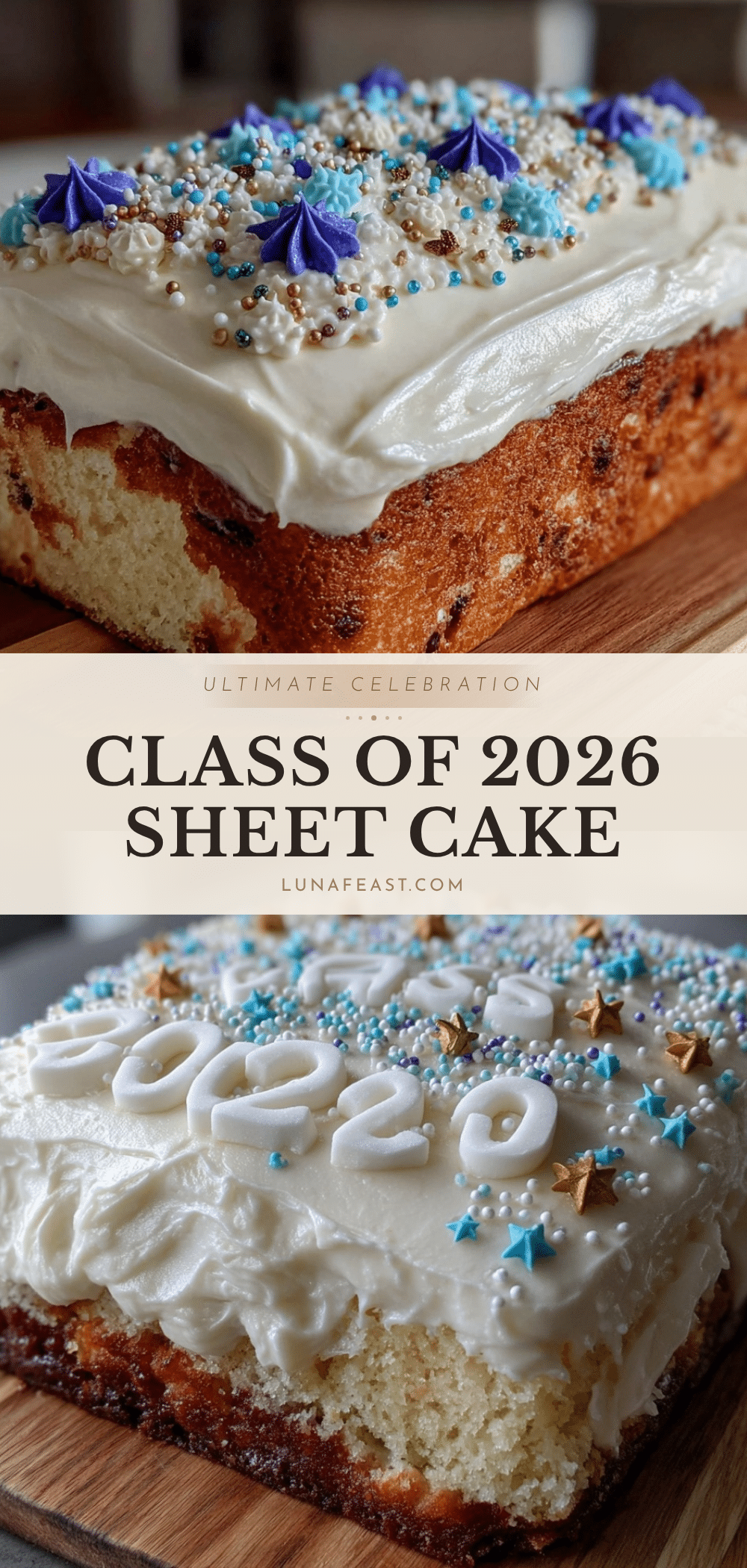
Perfect Class of 2026 Sheet Cake Recipe Easy Elegant Fondant Design Tutorial
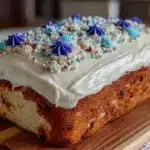
A moist and tender vanilla-almond sheet cake topped with smooth, elegant fondant and gold lettering, perfect for graduation parties and milestone celebrations.
- Prep Time: 20 minutes
- Cook Time: 30-35 minutes
- Total Time: 2 hours 35 minutes
- Yield: 12 servings 1x
- Category: Dessert
- Cuisine: American
Ingredients
- 2 ½ cups (300 g) all-purpose flour, sifted
- 2 ½ tsp baking powder
- ½ tsp baking soda
- ½ tsp salt
- 1 cup (225 g) unsalted butter, softened
- 2 cups (400 g) granulated sugar
- 4 large eggs, room temperature
- 1 cup (240 ml) whole milk, room temperature
- 2 tsp vanilla extract
- ½ tsp almond extract (optional but recommended)
- For the Buttercream Frosting:
- 1 cup (225 g) unsalted butter, softened
- 4 cups (480 g) powdered sugar, sifted
- 1 tsp vanilla extract
- 2–3 tbsp (30–45 ml) heavy cream or milk
- Pinch of salt
- For the Fondant Design:
- About 1 lb (450 g) ready-to-roll fondant, white and gold (or tint white fondant with gel food coloring)
- Edible gold dust or paint
- Fondant rolling pin and smoothers
- Letter cutters or stencils
- Edible glue or water
Instructions
- Preheat oven to 350°F (175°C). Grease a 9×13 inch sheet pan and line with parchment paper, leaving overhang for easy removal. Sift together flour, baking powder, baking soda, and salt; set aside.
- Using an electric mixer, beat softened butter on medium speed until smooth and slightly fluffy, about 2 minutes. Gradually add granulated sugar and mix until pale and airy.
- Add eggs one at a time, beating well after each addition.
- Alternately add dry ingredients and milk to the butter mixture, beginning and ending with dry ingredients. Mix on low speed to avoid overworking. Stir in vanilla and almond extracts gently.
- Pour batter into prepared pan and smooth the top. Bake for 30-35 minutes or until a toothpick inserted in the center comes out clean. Check after 25 minutes to avoid overbaking.
- Cool cake in pan for 10 minutes, then transfer to wire rack using parchment overhang. Cool completely (at least 1 hour) before frosting.
- Prepare buttercream frosting by beating softened butter until smooth. Gradually add powdered sugar alternating with cream until light and spreadable. Add vanilla and salt. Adjust consistency as needed.
- Spread a thin crumb coat of buttercream over cooled cake. Chill in fridge for 15 minutes to set.
- Dust workspace with cornstarch or powdered sugar. Roll fondant to about 1/8 inch (3 mm) thickness, large enough to cover cake with slight overhang. Drape fondant over cake and smooth with fondant smoothers. Trim excess.
- Use letter cutters or stencils to cut ‘Class of 2026’ from gold-tinted fondant or paint edible gold dust onto white fondant letters. Attach letters and any fondant accents with edible glue or water.
- Let cake rest at room temperature for 30 minutes before serving to soften fondant for easier slicing.
Notes
Ensure cake is completely cool before applying buttercream or fondant to prevent sliding. Dust hands and tools lightly with cornstarch or powdered sugar to prevent fondant sticking. If fondant cracks, knead gently before rolling. Prepare fondant design a day ahead to reduce party-day stress. Use a serrated knife dipped in hot water for clean slicing. For gluten-free, substitute all-purpose flour with 1:1 gluten-free baking flour. For dairy-free, use almond or oat milk and coconut oil in frosting.
Nutrition
- Serving Size: 1 slice (1/12 of cak
- Calories: 350
- Sugar: 30
- Sodium: 200
- Fat: 18
- Saturated Fat: 10
- Carbohydrates: 45
- Fiber: 1
- Protein: 5
Keywords: sheet cake, graduation cake, fondant cake, vanilla almond cake, easy sheet cake, elegant cake design, Class of 2026 cake