“You’re not just eating for two,” my midwife said, “you’re eating for two, but you’ve got to keep blood sugar in check.” That moment stuck with me like a stubborn spice lingering on the tongue. Managing gestational diabetes felt overwhelming at first — every meal a puzzle, every bite a question mark. Honestly, I wasn’t sure if enjoying dinner was even going to be possible anymore.
One evening, after a particularly exhausting day juggling work and doctor appointments, I threw together what I thought was just a simple meal to fill the gap. The ingredients were humble, nothing fancy — but the balance of flavors and textures surprised me. It was nourishing and satisfying without the usual blood sugar spike panic. That night, I realized healthy low glycemic dinners didn’t have to be complicated or bland. They could be genuinely comforting.
Since then, this approach has been my go-to, especially when I wanted a meal that felt like a hug after a long day. The recipes I’m sharing here aren’t just for gestational diabetes management — they’re for anyone who wants a dinner that feels wholesome, doable, and honestly delicious. It’s about finding calm in the kitchen and on the plate, without sacrificing taste.
These dinners have quietly become a staple in my routine, the kind people ask about without knowing the story behind them. And the best part? They’re easy enough for busy nights yet feel special enough to share when company drops by unexpectedly.
Why You’ll Love This Recipe
After testing countless versions, tweaking seasonings, and balancing carbs, fats, and proteins, I can say these healthy low glycemic dinners for gestational diabetes really hit the mark. Here’s why they stand out:
- Quick & Easy: Most recipes come together in under 30 minutes, perfect for busy evenings when you want healthy without hassle.
- Simple Ingredients: You won’t need obscure items — pantry staples and fresh produce carry the day here.
- Perfect for Gestational Diabetes Management: Carefully chosen low glycemic ingredients help keep blood sugar steady without sacrificing flavor.
- Crowd-Pleaser: These dishes consistently get nods of approval from family and friends, not just those watching their sugars.
- Unbelievably Delicious: The texture and seasoning profiles bring satisfaction that goes beyond “diet food.”
What sets these dinners apart is the gentle balance — using techniques like roasting vegetables to deepen natural sweetness, pairing lean proteins with fiber-rich sides, and seasoning with herbs that add complexity without salt overload. It’s not just about low glycemic index numbers but about crafting meals that feel like a treat, not a chore.
Honestly, these recipes helped me reclaim dinnertime confidence during a tricky chapter. They’re not just safe meals; they’re meals that make you look forward to eating again.
What Ingredients You Will Need
This collection of healthy low glycemic dinners relies on straightforward, wholesome ingredients to deliver bold flavors and keep blood sugar levels stable. Most items are easy to find year-round, with a few seasonal veggies for variety.
- Lean Proteins: skinless chicken breast, firm tofu, wild-caught salmon (rich in omega-3s), and lean ground turkey
- Whole Grains & Legumes: quinoa (a great low glycemic seed), lentils (fiber-packed), brown rice (choose short-grain for lower GI), chickpeas (versatile and filling)
- Fresh Vegetables: leafy greens like spinach and kale, zucchini, bell peppers, broccoli, cauliflower, and cherry tomatoes (roasted for natural sweetness)
- Healthy Fats: extra virgin olive oil (for sautéing and dressing), avocado (adds creamy texture), and nuts like almonds or walnuts (chopped for crunch)
- Herbs & Spices: garlic, fresh parsley, rosemary, cumin, smoked paprika, black pepper, and lemon zest (to brighten flavors)
- Dairy or Alternatives: plain Greek yogurt (adds creaminess and tang), feta cheese (optional, for topping), or dairy-free coconut yogurt for those avoiding dairy
For best results, I recommend buying organic leafy greens when possible and choosing wild-caught salmon over farmed varieties for cleaner flavor and fewer contaminants. Quinoa from brands like Bob’s Red Mill gives a fluffier texture after cooking, which I prefer.
Substitutions are straightforward: swap brown rice for cauliflower rice to reduce carbs further, or replace chicken with tempeh if you want a plant-based protein boost. Frozen vegetables work well too; I keep bags of frozen spinach and broccoli handy for last-minute dinners.
Equipment Needed
To prepare these healthy low glycemic dinners, you’ll need some basic kitchen tools that most home cooks already own:
- A sharp chef’s knife for chopping vegetables and proteins
- A sturdy cutting board (preferably wood or bamboo for ease and hygiene)
- A large non-stick skillet or sauté pan for browning proteins and vegetables
- A medium saucepan with a lid for cooking grains like quinoa or brown rice
- A baking sheet or roasting pan for roasted vegetables or sheet-pan dinners
- Measuring cups and spoons for accuracy
If you don’t have a roasting pan, a rimmed baking sheet lined with parchment paper works just fine. For grains, a rice cooker can be a helpful shortcut but isn’t necessary — I’ve cooked quinoa perfectly on the stovetop dozens of times.
Personally, investing in a good-quality non-stick skillet made a world of difference for me. It prevents sticking, making cleanup easier and helping foods brown evenly.
Preparation Method
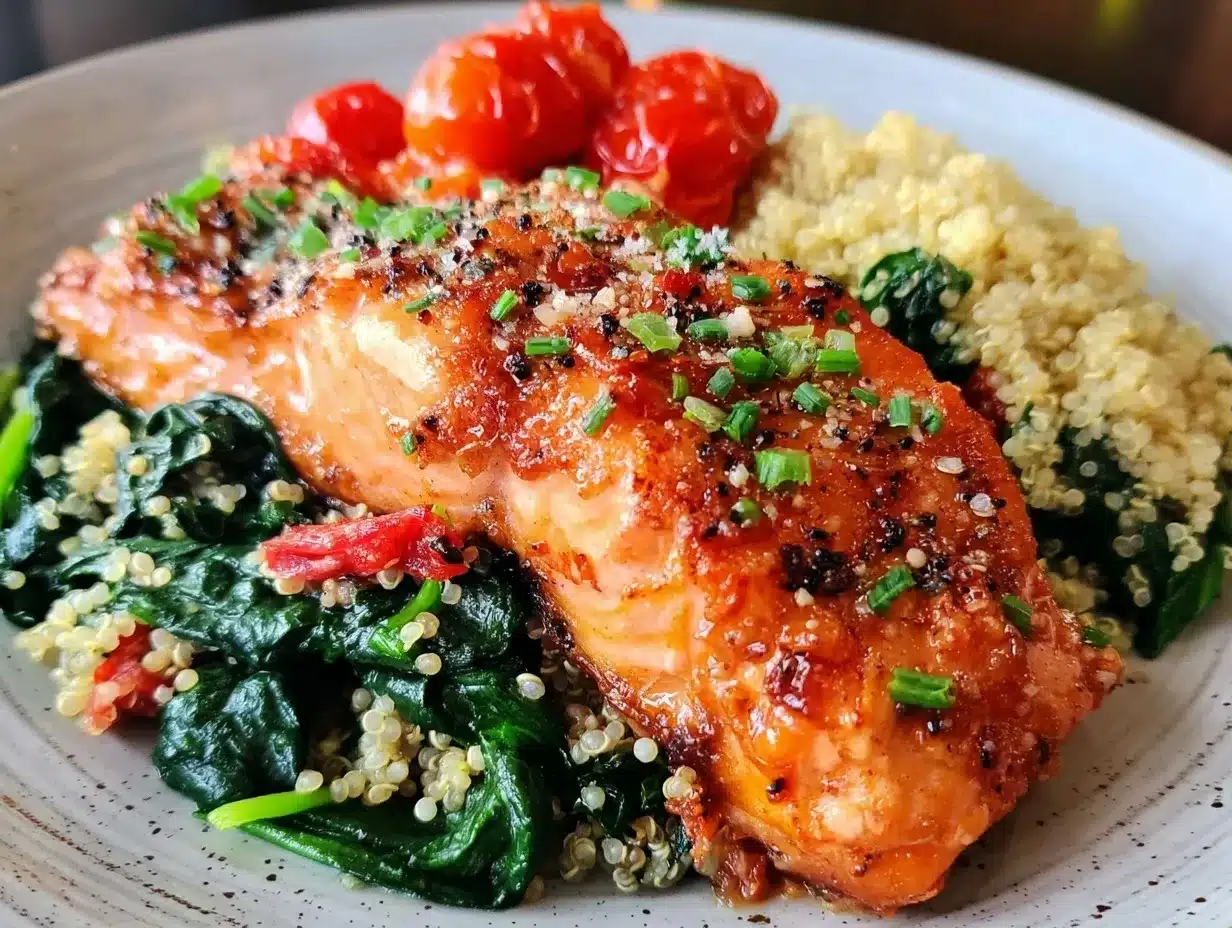
- Prep the Ingredients (10-15 minutes): Start by rinsing 1 cup (185g) of quinoa under cold water to remove its natural bitterness. Chop 2 cups (300g) of mixed vegetables like zucchini, bell peppers, and broccoli into bite-sized pieces. If using chicken, pat dry 1 pound (450g) of skinless chicken breast and season lightly with salt, pepper, and 1 teaspoon smoked paprika.
- Cook the Quinoa (15 minutes): In a medium saucepan, combine the rinsed quinoa with 2 cups (475ml) of water. Bring to a boil, then reduce heat to low, cover, and simmer for 15 minutes or until water is absorbed. Fluff with a fork and set aside. (Tip: Adding a pinch of salt enhances the flavor.)
- Sauté the Protein (8-10 minutes): Heat 1 tablespoon of extra virgin olive oil in a large non-stick skillet over medium-high heat. Add the chicken breasts and cook 4-5 minutes per side until golden and cooked through (internal temperature 165°F/74°C). Remove and let rest before slicing thinly.
- Roast the Vegetables (20 minutes): Toss chopped vegetables with 1 tablespoon olive oil, 1 teaspoon garlic powder, and freshly ground black pepper. Spread evenly on a baking sheet and roast in a preheated oven at 425°F (220°C) for 20 minutes until tender and slightly caramelized. Stir halfway through for even cooking.
- Assemble the Dinner Bowl: Start with a base of quinoa, layer the roasted vegetables, and top with sliced chicken. Drizzle 2 tablespoons of plain Greek yogurt mixed with lemon zest and chopped parsley as a light sauce. Add a sprinkle of chopped almonds for crunch.
During preparation, watch for quinoa turning fluffy with a nutty aroma — that’s your cue it’s ready. When roasting vegetables, the edges should brown lightly without burning; this adds depth of flavor.
I usually multitask by prepping the quinoa first, then moving to sauté the protein while the veggies roast. This timing keeps things efficient and the kitchen from getting too crowded.
Cooking Tips & Techniques
Cooking healthy low glycemic dinners doesn’t have to be intimidating, but a few lessons learned the hard way can save you from common pitfalls:
- Don’t Overcook Proteins: Lean chicken breast can dry out fast, so watch the clock and use a meat thermometer if you have one. Resting the meat after cooking keeps it juicy.
- Rinse Quinoa Thoroughly: Skipping this step often leaves a bitter aftertaste. Rinse under cold water with a fine mesh sieve until water runs clear.
- Roast Vegetables at High Heat: This caramelizes natural sugars, making them sweeter without adding extra carbs or sugars. It’s a game-changer for flavor.
- Season in Layers: Don’t just salt at the end. Season the chicken before cooking, toss veggies with spices before roasting, and add fresh herbs when assembling for brightness.
- Use Greek Yogurt Wisely: It adds creaminess and protein without spiking blood sugar. Mix it with lemon zest or cumin to boost flavor without extra calories.
One time, I under-seasoned my roasted veggies, and the whole dish tasted flat — lesson learned. Now, I’m generous with herbs and spices, which makes all the difference.
Timing is key, especially when juggling work or kids. Preparing grains ahead in batches can cut down evening stress, and roasting vegetables while cooking protein maximizes efficiency.
Variations & Adaptations
You can easily customize these healthy low glycemic dinners to suit your taste, dietary needs, or what’s in your fridge.
- Plant-Based Swap: Replace chicken with firm tofu or tempeh, marinated in tamari and smoked paprika, then pan-fried until crisp. This keeps protein high and glycemic load low.
- Seasonal Veggie Changes: Use roasted butternut squash and Brussels sprouts in fall, or grilled asparagus and cherry tomatoes in summer for variety and freshness.
- Different Grains: Swap quinoa for barley or farro if you’re not avoiding gluten. Both have a low glycemic index and add chewiness. For a grain-free option, cauliflower rice works well.
- Spice It Up: Try adding a teaspoon of curry powder or za’atar to the roasted vegetables for a flavor twist. Your taste buds won’t get bored.
- Dairy-Free Option: Use coconut or almond yogurt instead of Greek yogurt for the topping. It adds creaminess without dairy, ideal for sensitive stomachs.
Personally, I once made a version with chickpeas and spinach tossed in turmeric and cumin that became a weeknight favorite. The warmth of the spices perfectly complemented the creamy yogurt drizzle.
Serving & Storage Suggestions
These healthy low glycemic dinners are best served warm, right after assembling for the freshest textures and flavors. The contrast between the roasted vegetables’ slight crispness and the creamy yogurt topping makes each bite satisfying.
Pair your dinner with a simple side salad of mixed greens and a light vinaigrette or steamed green beans for extra fiber and vitamins. A glass of infused water with cucumber and mint keeps things refreshing without added sugar.
Leftovers keep well in an airtight container in the refrigerator for up to 3 days. When reheating, warm gently in a skillet or microwave to avoid drying out the protein. Add fresh herbs or a squeeze of lemon after reheating to brighten flavors again.
Flavors meld nicely overnight, so sometimes I actually prefer these bowls the next day, when the spices have had time to mingle. Just remember to keep the yogurt separate until serving to prevent it from curdling.
Nutritional Information & Benefits
Each serving of these healthy low glycemic dinners typically contains:
| Calories | Approximately 400-450 kcal |
|---|---|
| Carbohydrates | 35-40 grams (mostly low glycemic) |
| Protein | 30-35 grams (lean and satisfying) |
| Fat | 10-15 grams (mostly healthy fats from olive oil and nuts) |
| Fiber | 8-10 grams (from vegetables, grains, and legumes) |
Key health benefits include steady blood sugar control, thanks to the balance of protein, fiber, and healthy fats. Ingredients like quinoa and lentils help slow digestion, avoiding the spikes and crashes that are tough for gestational diabetes.
This recipe is naturally gluten-free and can be adapted for dairy-free or vegetarian diets. It’s a wholesome, nutrient-dense dinner that supports both maternal health and baby’s development.
Conclusion
What started as a simple, no-nonsense dinner to manage gestational diabetes quickly became a trusted staple in my kitchen. These healthy low glycemic dinners prove you don’t have to sacrifice flavor or satisfaction when managing blood sugar — you just need the right balance and a few good tricks.
Feel free to tweak these recipes to your taste and what you have on hand. Whether adding your favorite herbs or swapping proteins, the foundation stays solid and forgiving.
I love these dinners because they offer calm in a sometimes chaotic health journey. They’re real food for real life, and I hope you find the same comfort and confidence in them that I did.
If you try any of these recipes or have your own twists, I’d love to hear about it in the comments below. Sharing those little kitchen wins makes it all the more rewarding!
FAQs About Healthy Low Glycemic Dinner for Gestational Diabetes
Q: Can I prepare these recipes ahead of time?
A: Absolutely! Cooking grains and roasting vegetables in advance can save time. Just store components separately and assemble fresh to keep textures vibrant.
Q: Are these meals suitable for people without gestational diabetes?
A: Yes, these dinners are nutritious and balanced, making them great for anyone wanting to manage blood sugar or simply eat wholesome meals.
Q: What if I don’t like quinoa? Can I use other grains?
A: Feel free to swap quinoa for brown rice, barley, or farro depending on your preferences and dietary needs.
Q: How can I make these recipes more kid-friendly?
A: Mild spices, familiar veggies like carrots or peas, and cutting proteins into bite-sized pieces help make these meals approachable for kids.
Q: Is Greek yogurt necessary for the sauce?
A: Greek yogurt adds creaminess and protein, but you can replace it with dairy-free yogurt or a light tahini dressing if preferred.
For more ideas on easy, crowd-pleasing recipes, you might enjoy the easy cheesy one pot hamburger helper or the cozy loaded baked potato bar for comfort food inspiration that’s still mindful of balanced eating.
Pin This Recipe!
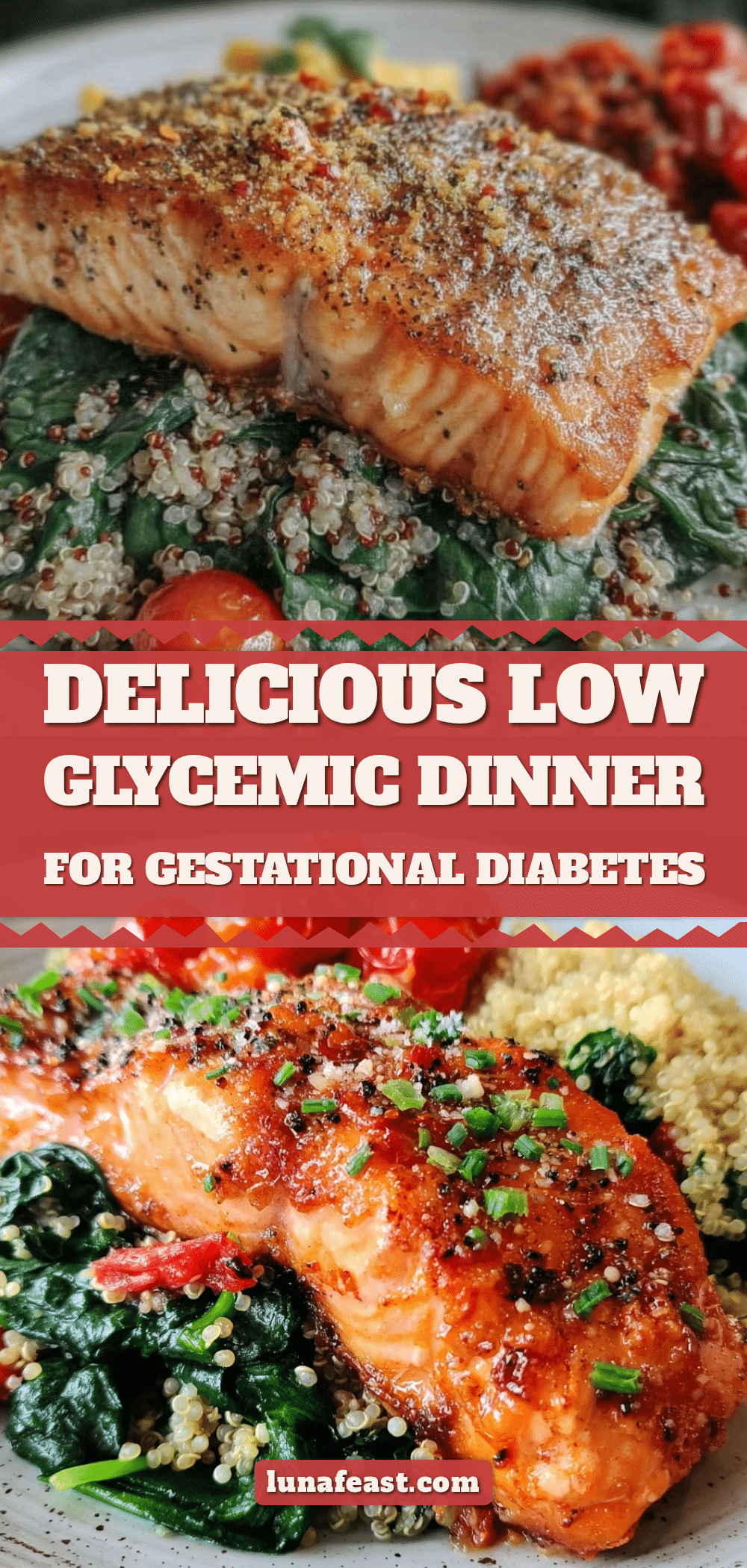
Healthy Low Glycemic Dinner for Gestational Diabetes
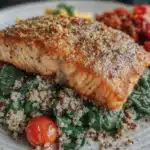
A collection of easy, nourishing low glycemic dinner recipes designed to manage blood sugar levels effectively, especially for gestational diabetes, while delivering satisfying flavors and textures.
- Prep Time: 15 minutes
- Cook Time: 35 minutes
- Total Time: 50 minutes
- Yield: 4 servings 1x
- Category: Main Course
- Cuisine: American
Ingredients
- 1 pound (450g) skinless chicken breast
- 1 cup (185g) quinoa
- 2 cups (300g) mixed vegetables (zucchini, bell peppers, broccoli)
- 1 tablespoon extra virgin olive oil (plus 1 tablespoon for roasting vegetables)
- 1 teaspoon smoked paprika
- 1 teaspoon garlic powder
- Freshly ground black pepper
- 2 tablespoons plain Greek yogurt
- Lemon zest
- Chopped fresh parsley
- Chopped almonds
- Optional: firm tofu or tempeh as protein substitute
- Optional: feta cheese for topping
- Optional: coconut or almond yogurt for dairy-free alternative
Instructions
- Rinse 1 cup quinoa under cold water to remove bitterness.
- Chop 2 cups mixed vegetables into bite-sized pieces.
- Pat dry 1 pound skinless chicken breast and season with salt, pepper, and 1 teaspoon smoked paprika.
- In a medium saucepan, combine rinsed quinoa with 2 cups water. Bring to a boil, reduce heat to low, cover, and simmer for 15 minutes until water is absorbed. Fluff with a fork and set aside.
- Heat 1 tablespoon olive oil in a large non-stick skillet over medium-high heat. Cook chicken breasts 4-5 minutes per side until golden and cooked through (165°F internal temperature). Remove and let rest before slicing thinly.
- Toss chopped vegetables with 1 tablespoon olive oil, 1 teaspoon garlic powder, and black pepper. Spread on a baking sheet and roast at 425°F (220°C) for 20 minutes, stirring halfway through.
- Assemble dinner bowl by layering quinoa, roasted vegetables, and sliced chicken.
- Drizzle with 2 tablespoons plain Greek yogurt mixed with lemon zest and chopped parsley.
- Sprinkle chopped almonds on top for crunch.
Notes
Do not overcook chicken to keep it juicy; use a meat thermometer if possible. Rinse quinoa thoroughly to avoid bitterness. Roast vegetables at high heat to caramelize natural sugars. Season in layers for best flavor. Use Greek yogurt or dairy-free alternatives for creaminess without blood sugar spikes. Prepare grains and roast vegetables ahead to save time.
Nutrition
- Serving Size: 1 bowl (approximatel
- Calories: 425
- Sugar: 5
- Sodium: 150
- Fat: 12
- Saturated Fat: 2
- Carbohydrates: 38
- Fiber: 9
- Protein: 32
Keywords: low glycemic, gestational diabetes, healthy dinner, quinoa, roasted vegetables, lean protein, blood sugar management